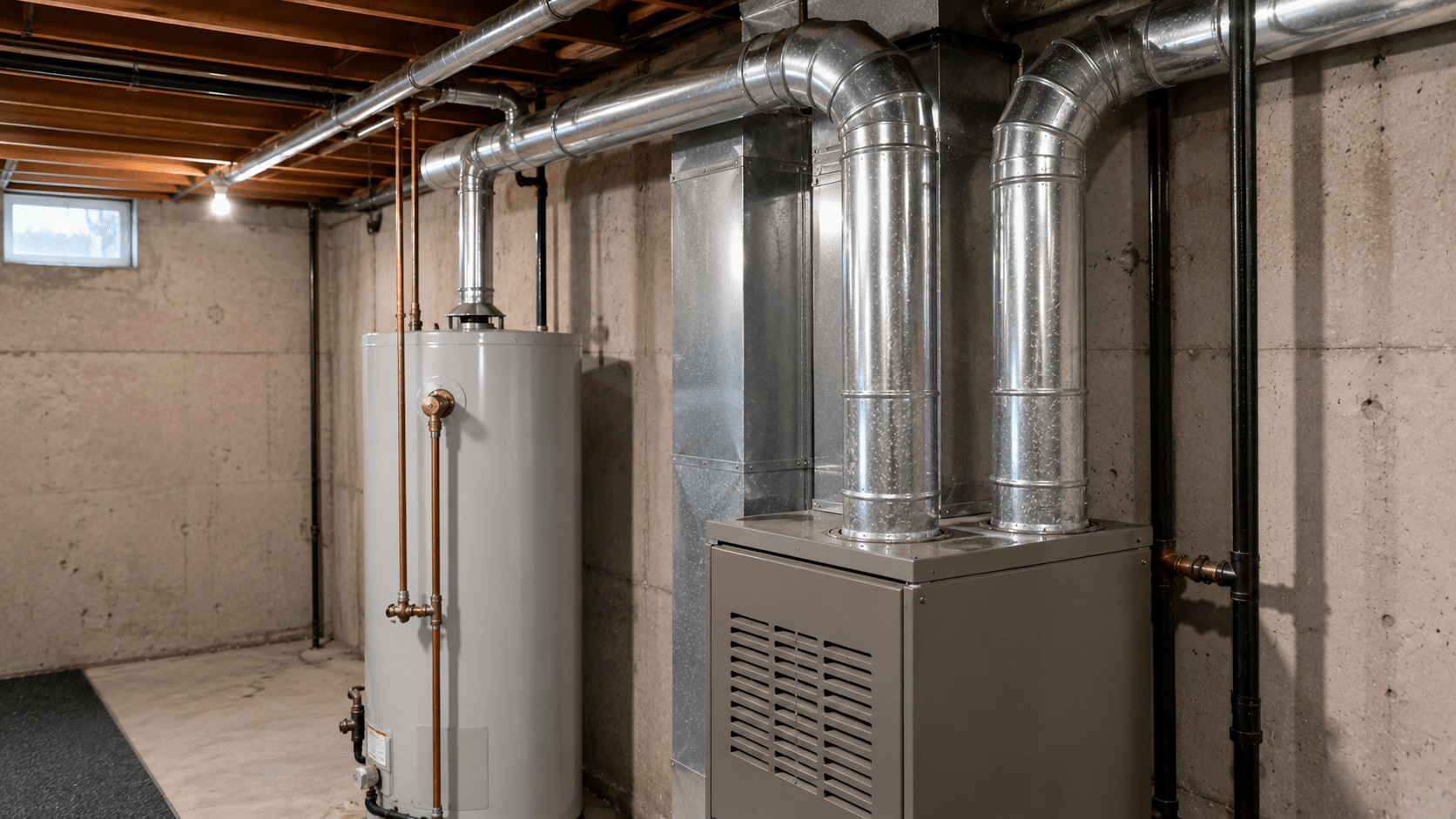
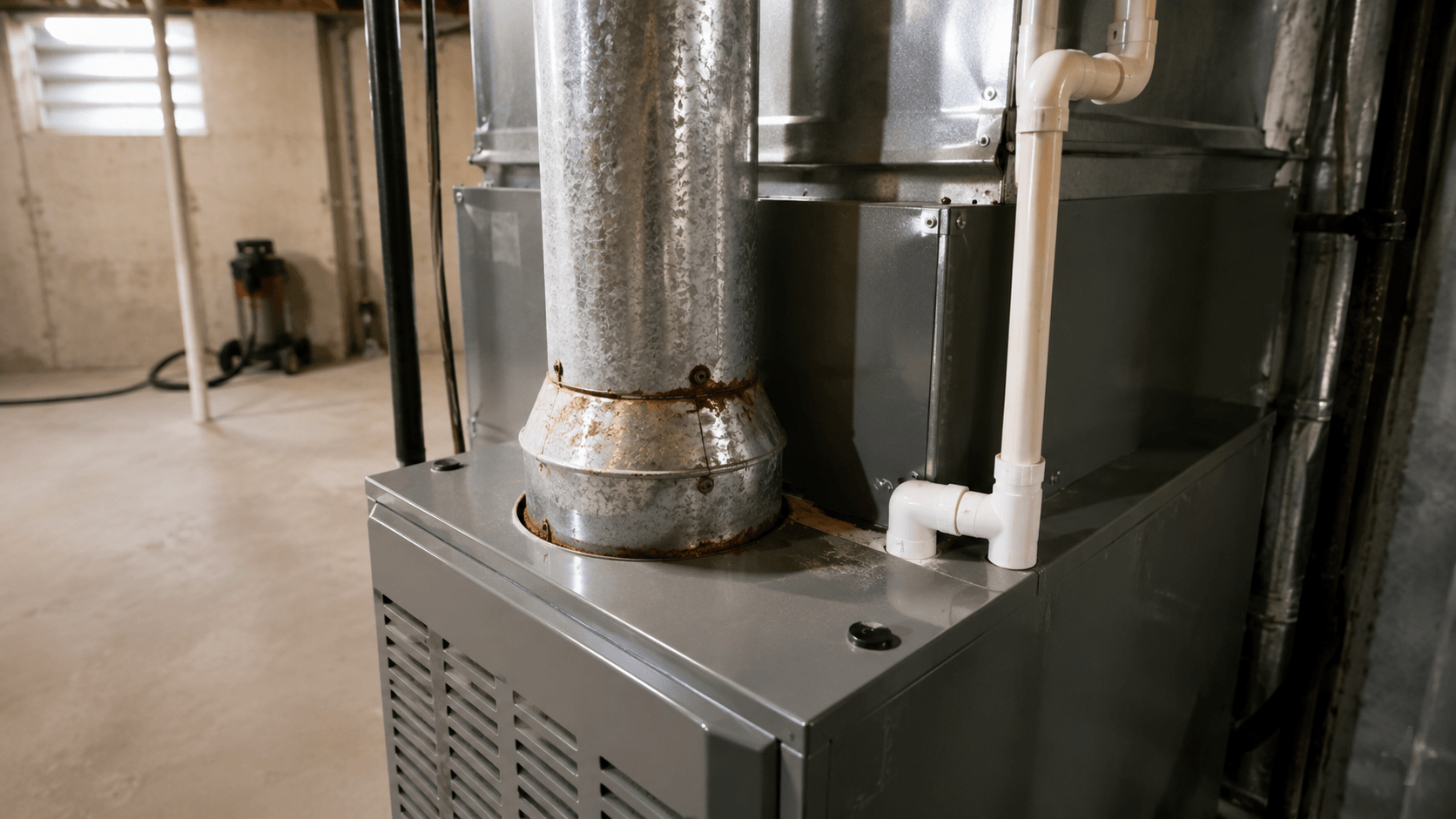
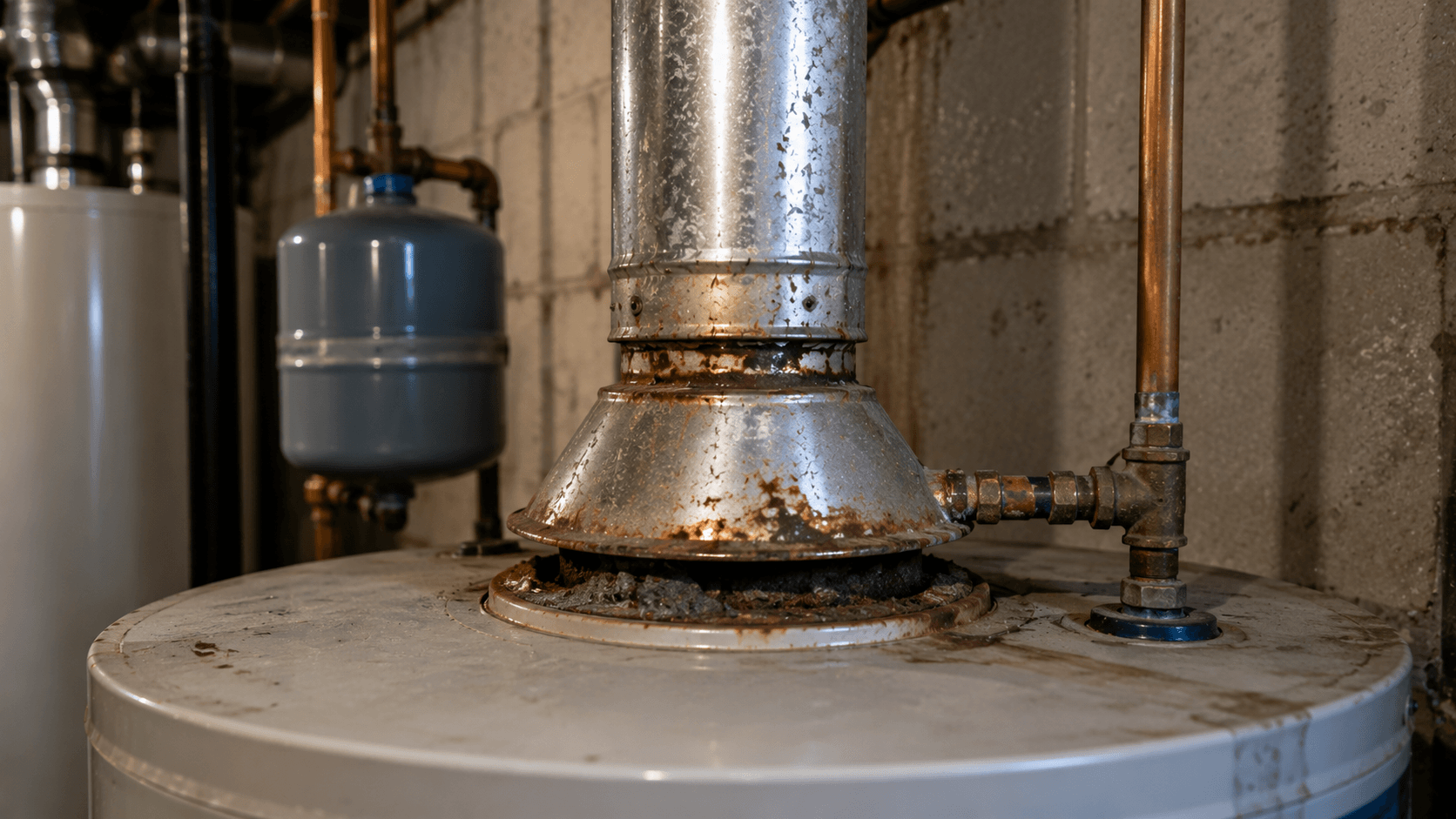
One problem that often looks minor to a homeowner is rust, corrosion, or white residue around a furnace or water-heater vent pipe.
Most homeowners see a little rust on the metal pipe and think it is just age. Sometimes they assume it is cosmetic because the furnace or water heater is still running. But from field experience, that small amount of rust can be a warning sign that the venting system is not working the way it should.
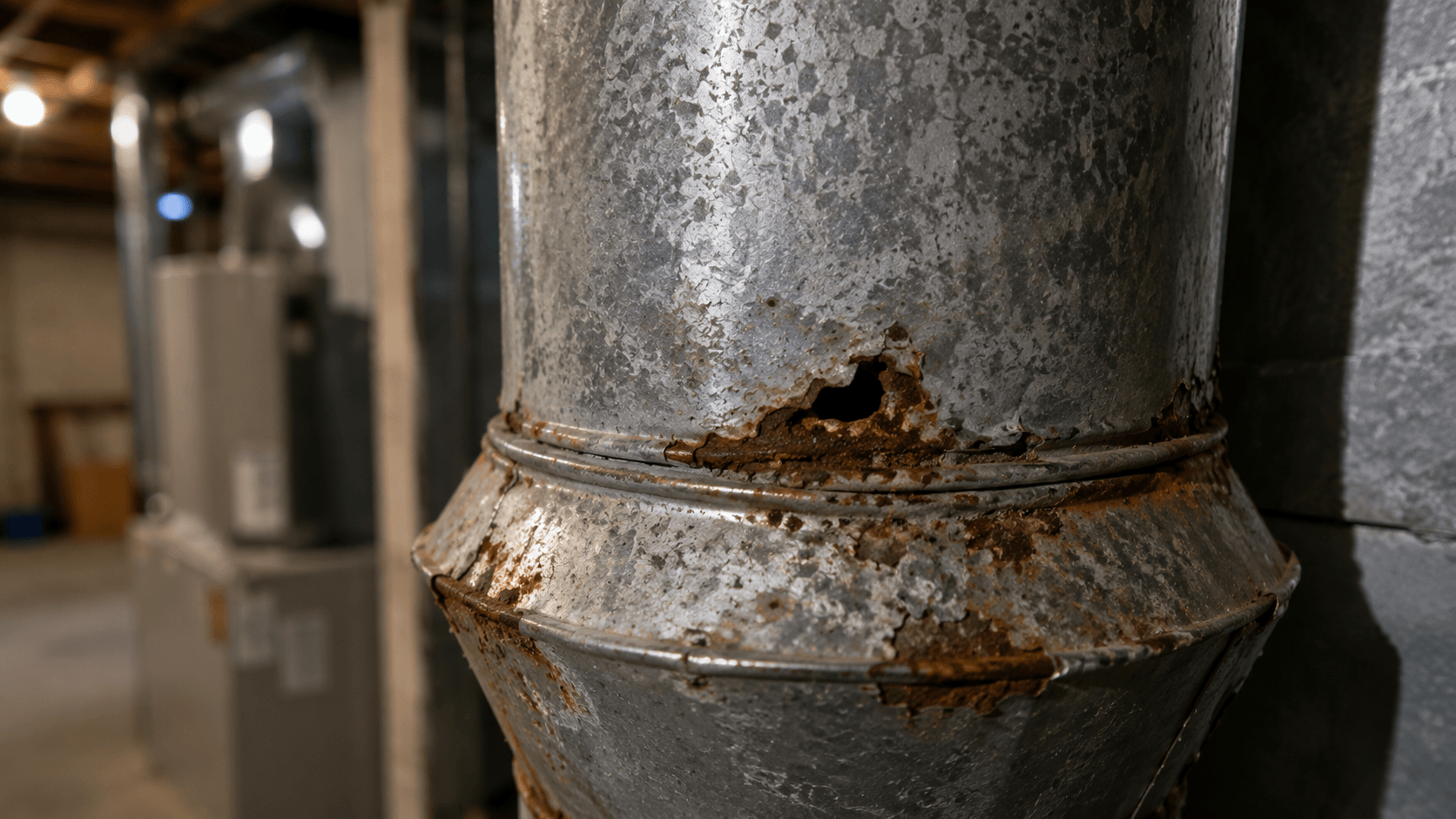
Why Rust Around a Furnace Vent Pipe Should Not Be Ignored
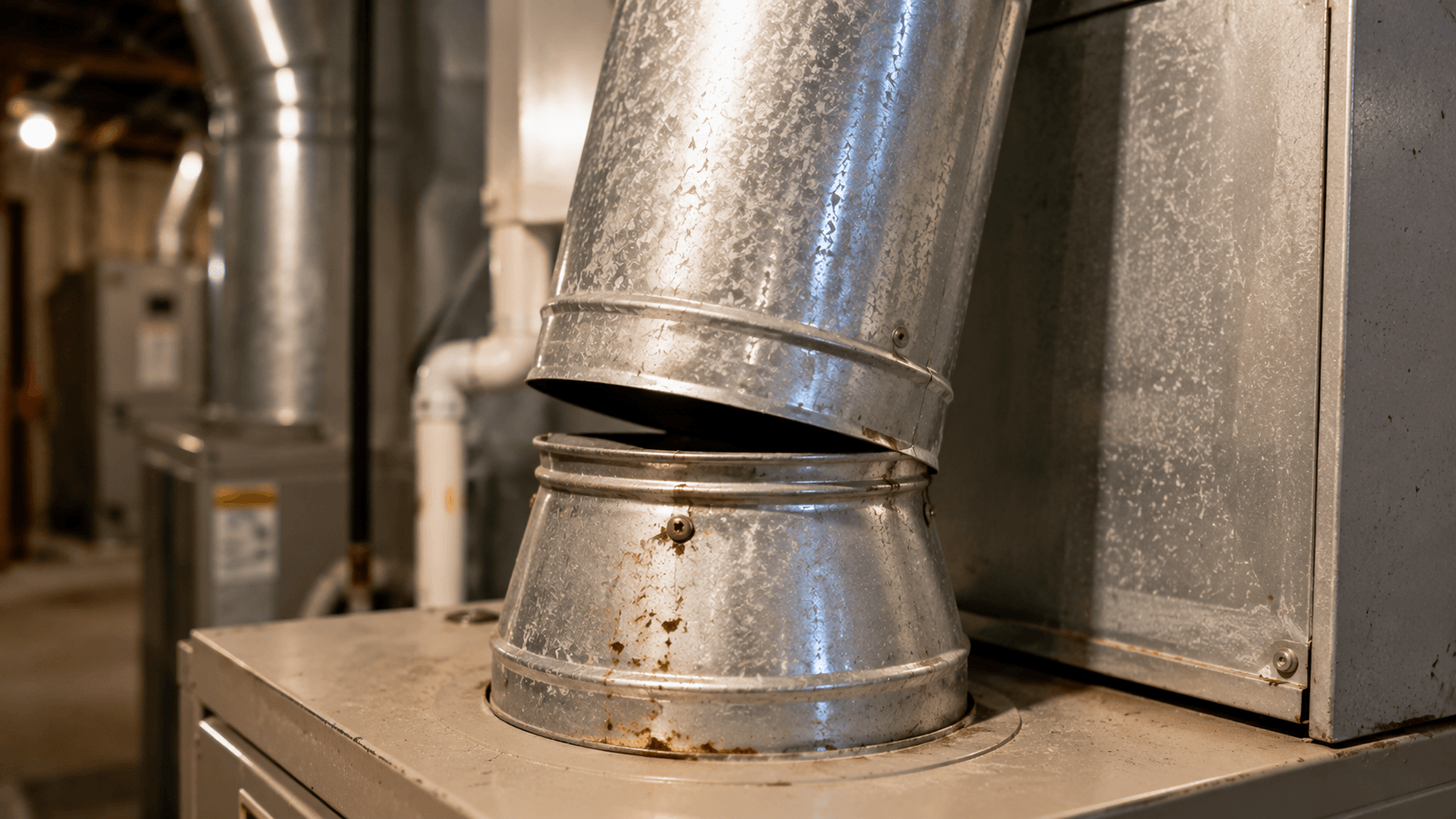
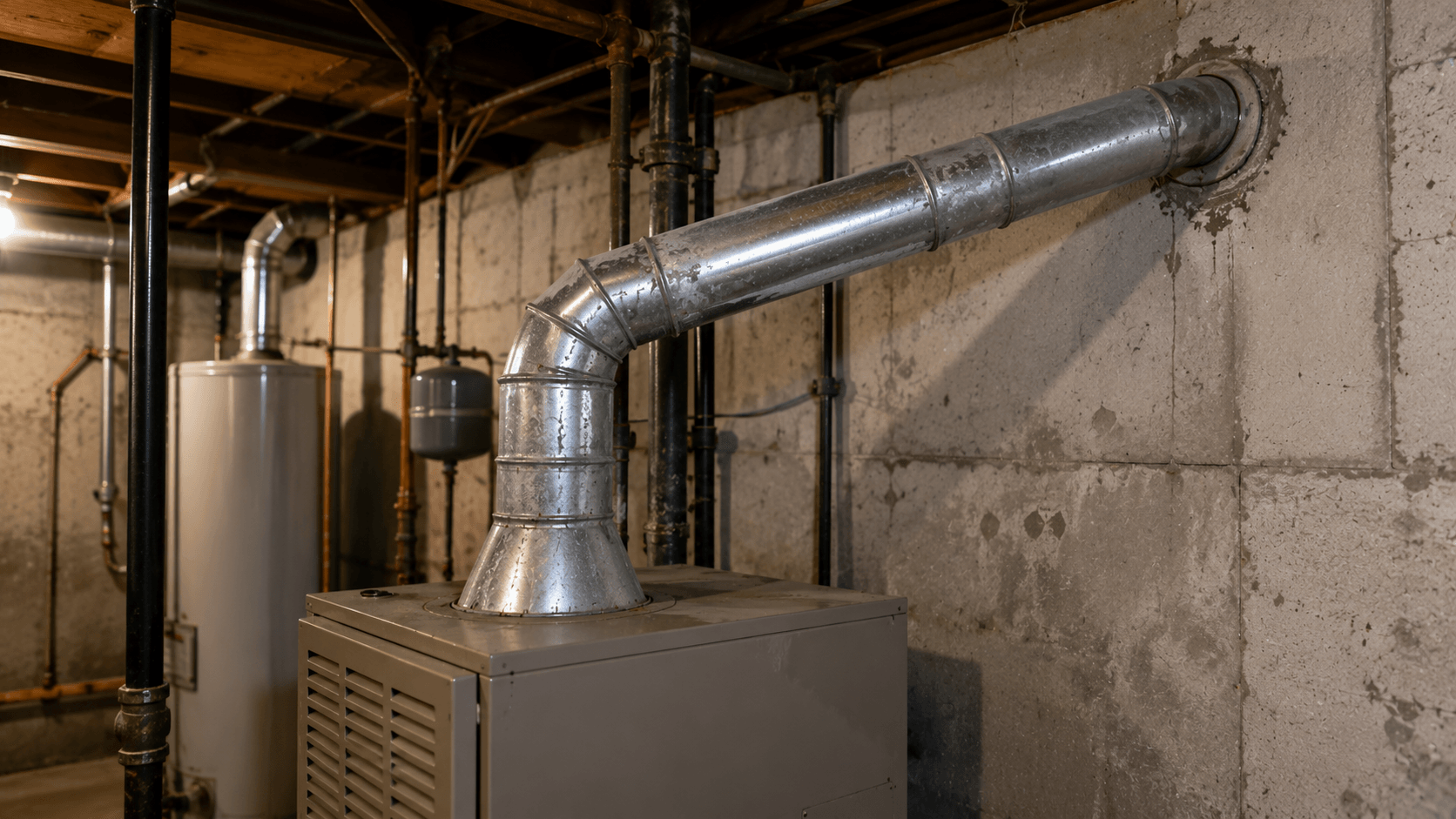
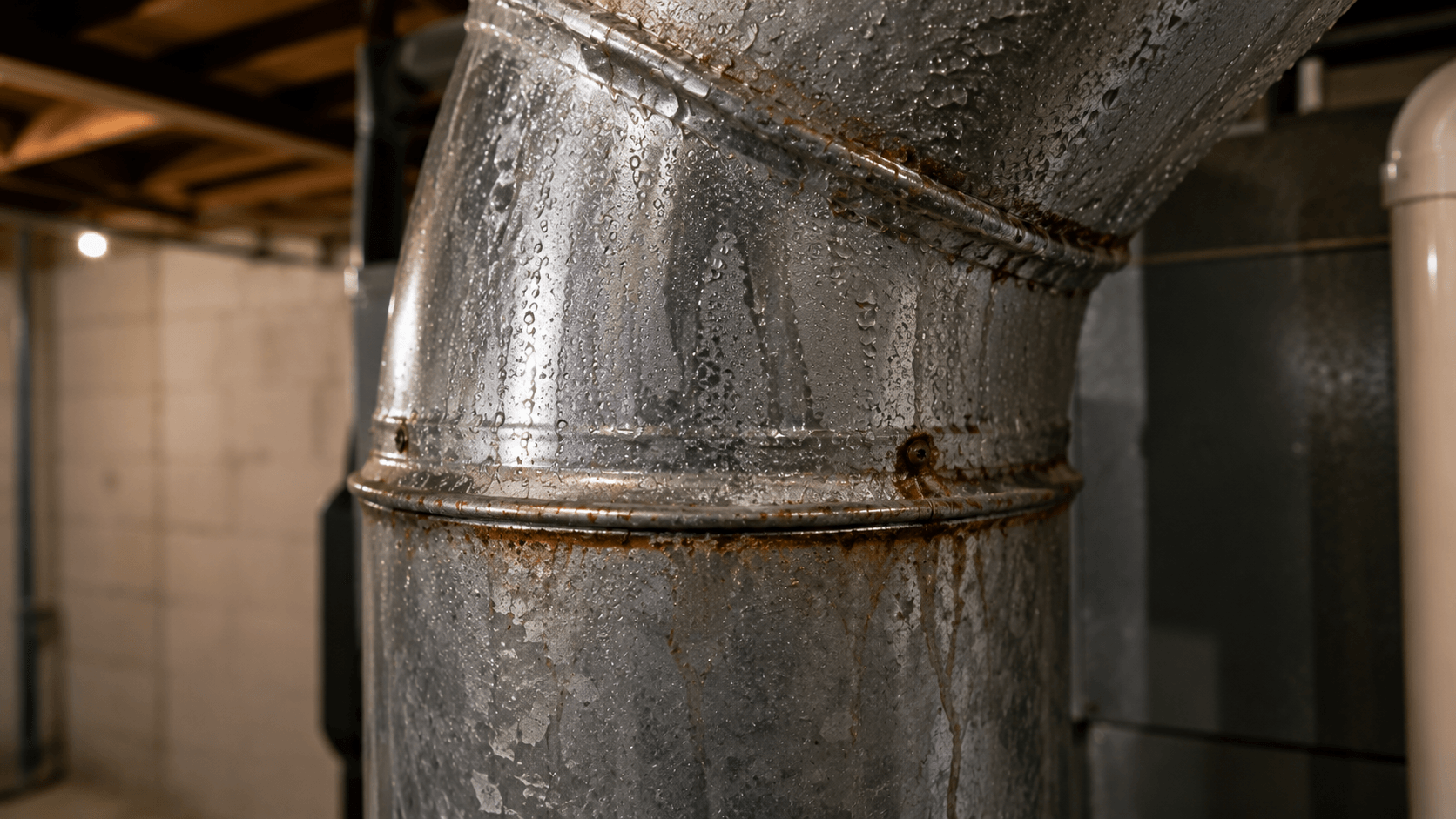
A furnace or water heater vent is supposed to carry exhaust gases safely out of the home. If the vent pipe is rusting, stained, loose, or showing signs of moisture, it may mean condensation is forming inside the vent. That can happen when the flue is oversized, undersized, blocked, poorly connected, improperly sloped, or not drafting correctly.
The appliance may still turn on even if the venting is unsafe. The issue is not only about replacing an old pipe — the underlying cause must be identified. Rust can be a sign of condensation, moisture, poor draft, or improper venting that needs professional evaluation.
Common Causes of Furnace and Water-Heater Venting Problems
When we inspect a furnace or water-heater venting system, these are the most common causes of problems:
- Oversized flue
- Undersized flue
- Blocked or restricted venting
- Poorly connected vent pipe
- Loose or separated pipe joints
- Improper vent pipe slope
- Condensation forming inside the vent
- Chimney liner issues
- Moisture coming back down the flue
- Poor draft or backdrafting
Why Furnace and Water-Heater Venting Issues Are Safety Issues
This matters because furnace and water-heater venting problems are not just repair issues — they are safety issues.
If exhaust gases are not leaving the home properly, the system can backdraft. That means fumes that should go up the chimney or vent may spill back into the basement, utility room, or living space. In some cases, that can create a carbon monoxide concern.
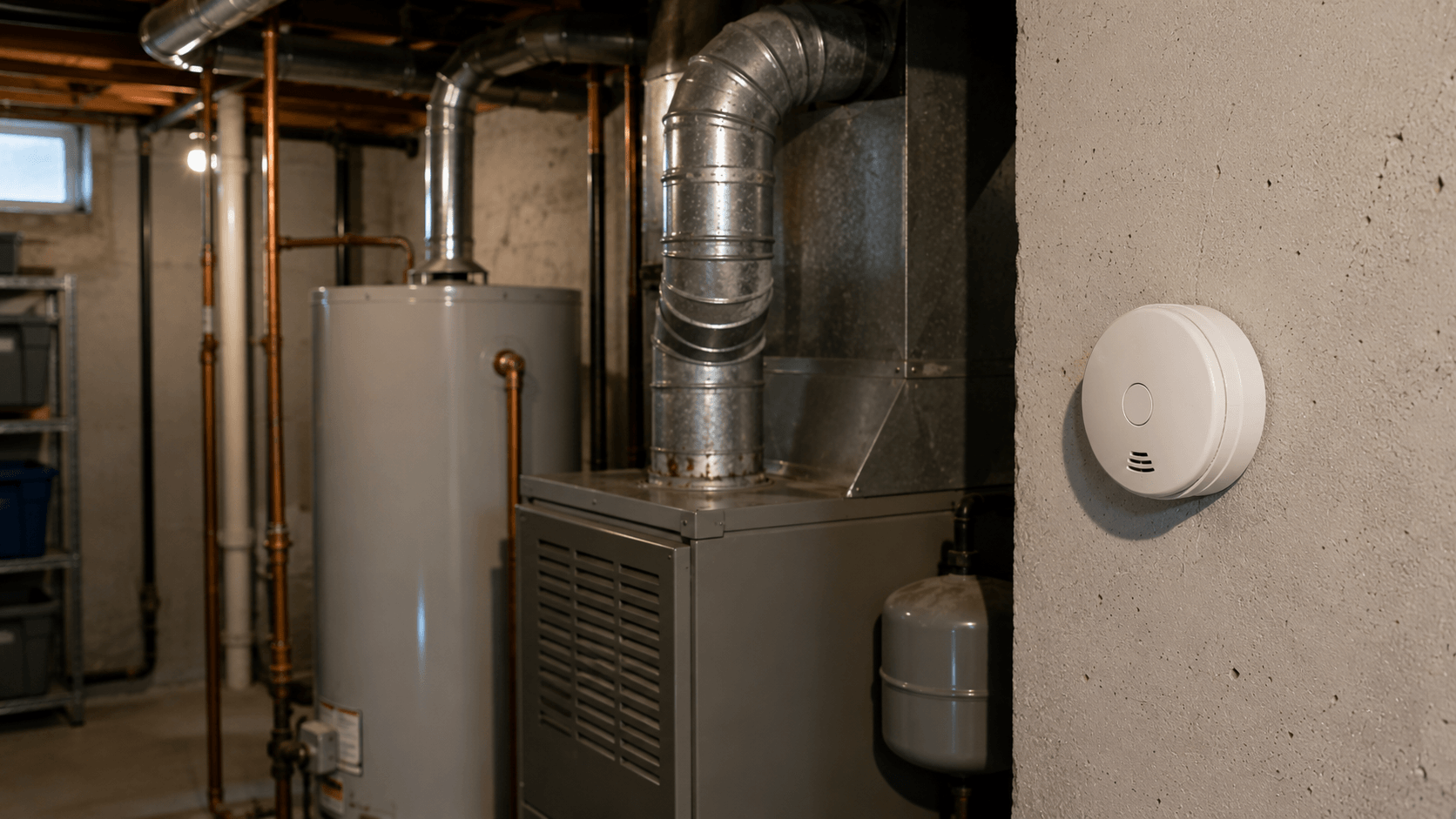
Carbon monoxide is especially dangerous because it cannot be seen or smelled. A properly drafting venting system is the first line of defense against combustion gas exposure in the home.
Warning Signs Homeowners Should Watch For
- Rust around the furnace vent pipe
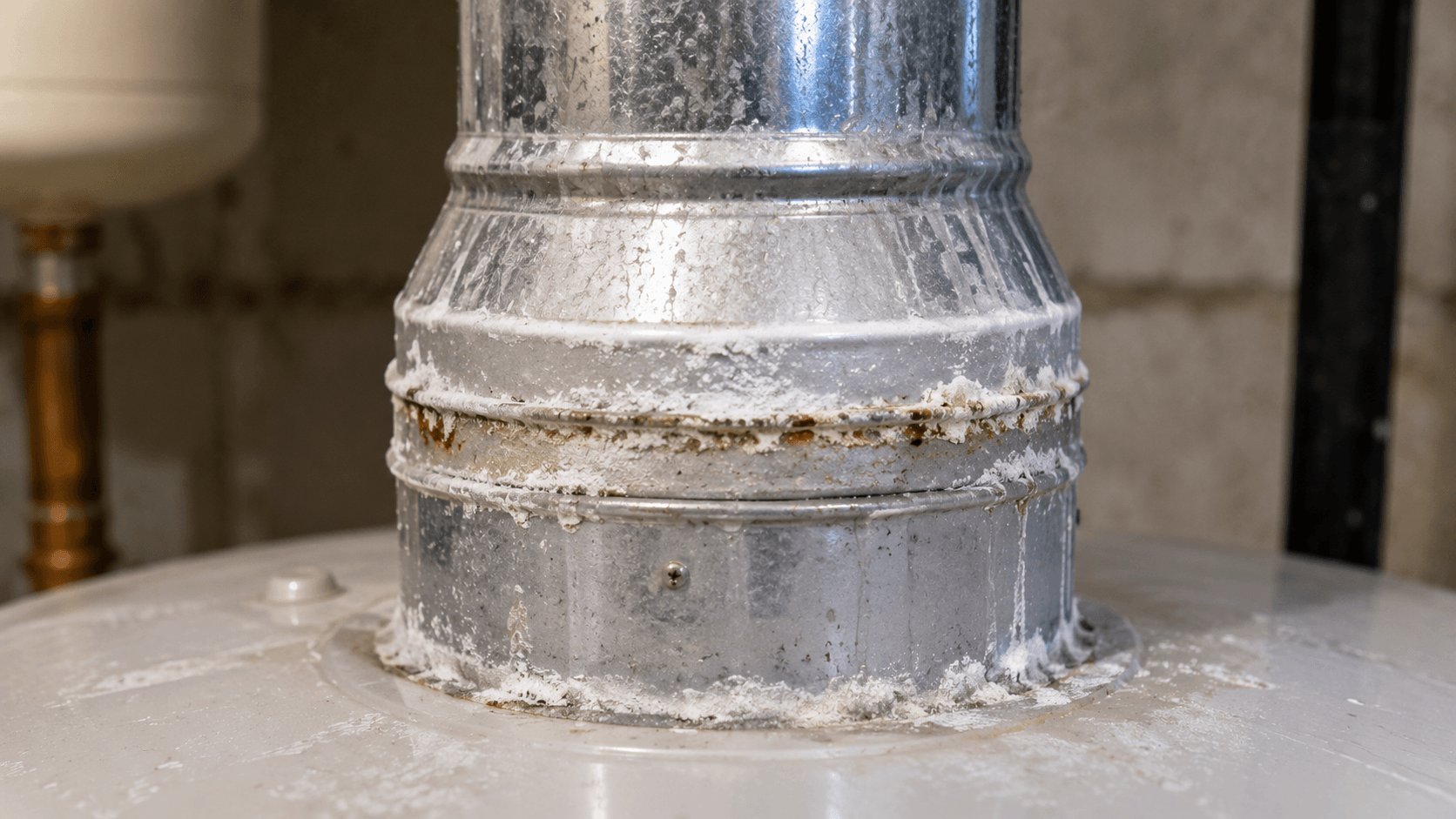
- Corrosion near the water-heater draft hood
- White powdery residue around vent joints
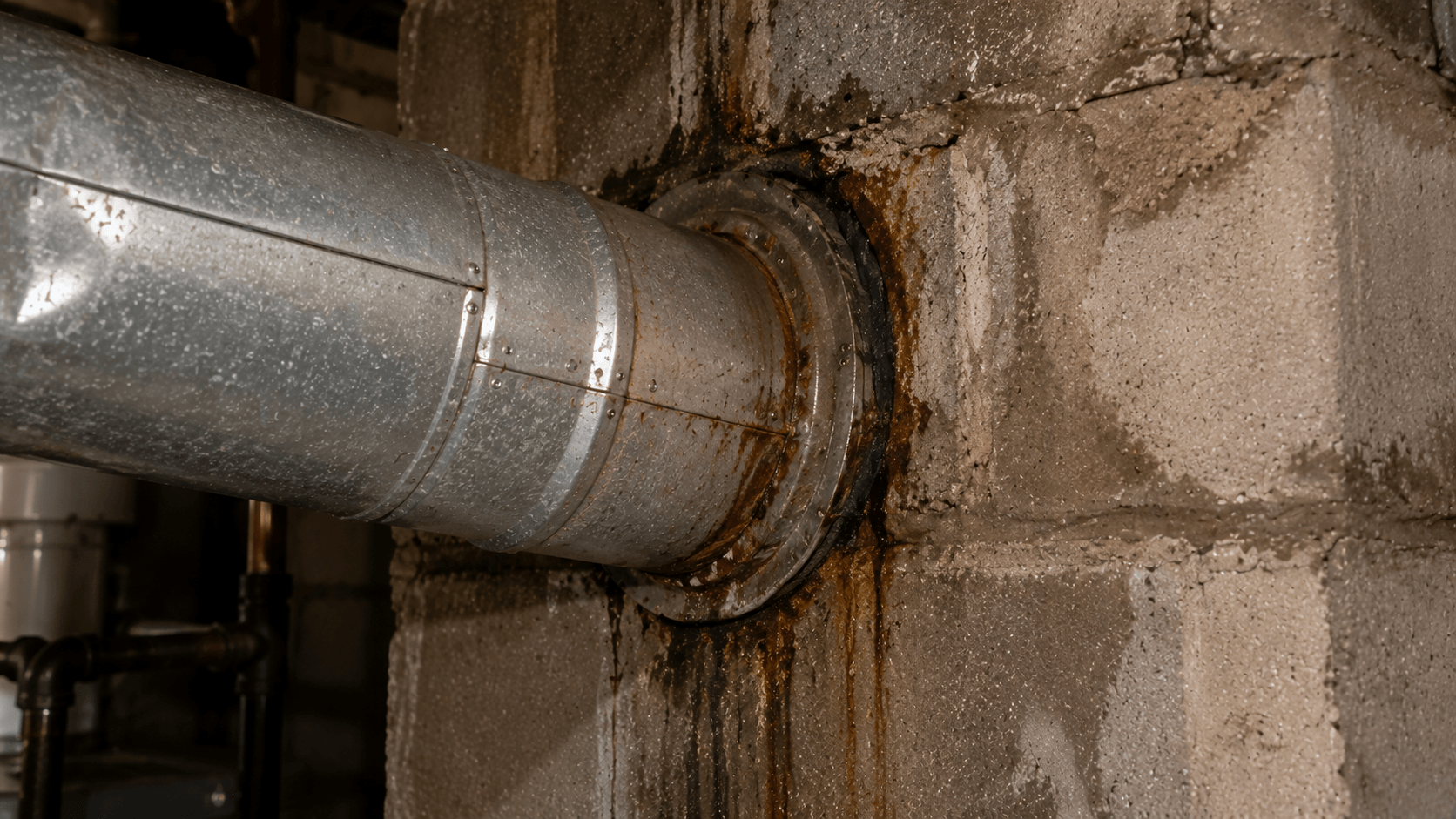
- Moisture stains on or around the vent pipe
- Loose or separated vent pipe joints
- Black soot marks near the draft hood or connector
- Unusual odor near the furnace or water heater
- Visible holes in the metal vent connector
- Signs of moisture where the vent enters the chimney
- Carbon monoxide alarm activation
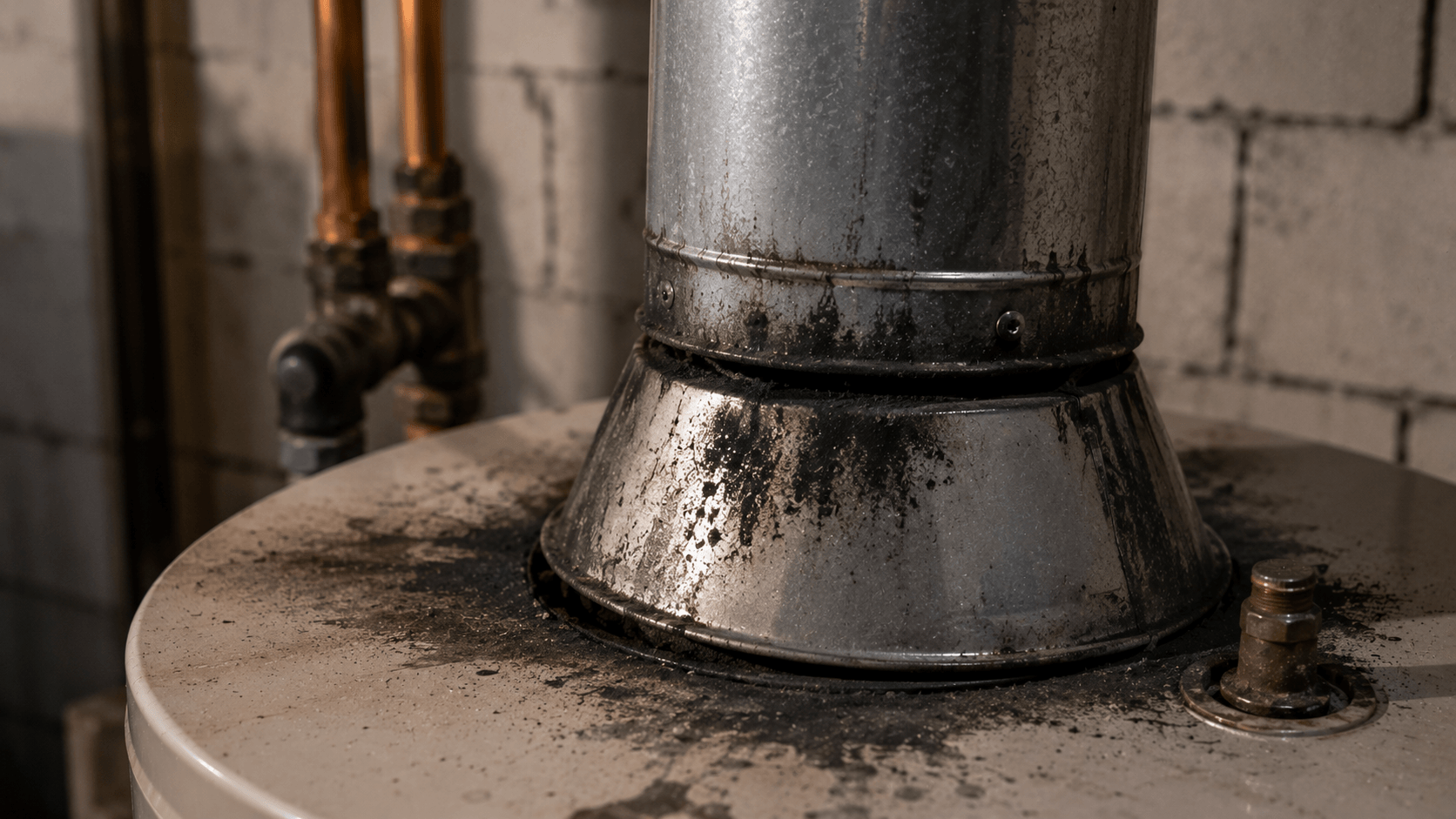
A Rusty Vent Pipe Is a Symptom, Not the Whole Diagnosis
That is why I do not look at a rusty furnace vent and think, "It is just an old pipe." I want to know why it is rusting. Is the appliance drafting properly? Is the chimney lined correctly? Is the vent connector the right size? Is there moisture coming back down the flue? Is the system safely removing combustion gases?
Another thing homeowners often miss is that corrosion can keep spreading. A small rust spot can turn into holes in the vent connector, separated pipe joints, damaged chimney liner, or a venting system that no longer meets safe operating conditions.
Why Early Inspection Can Prevent Bigger Repairs
A small venting issue is often much cheaper to correct early than after the pipe fails, the chimney liner deteriorates, or the system creates a serious safety risk.
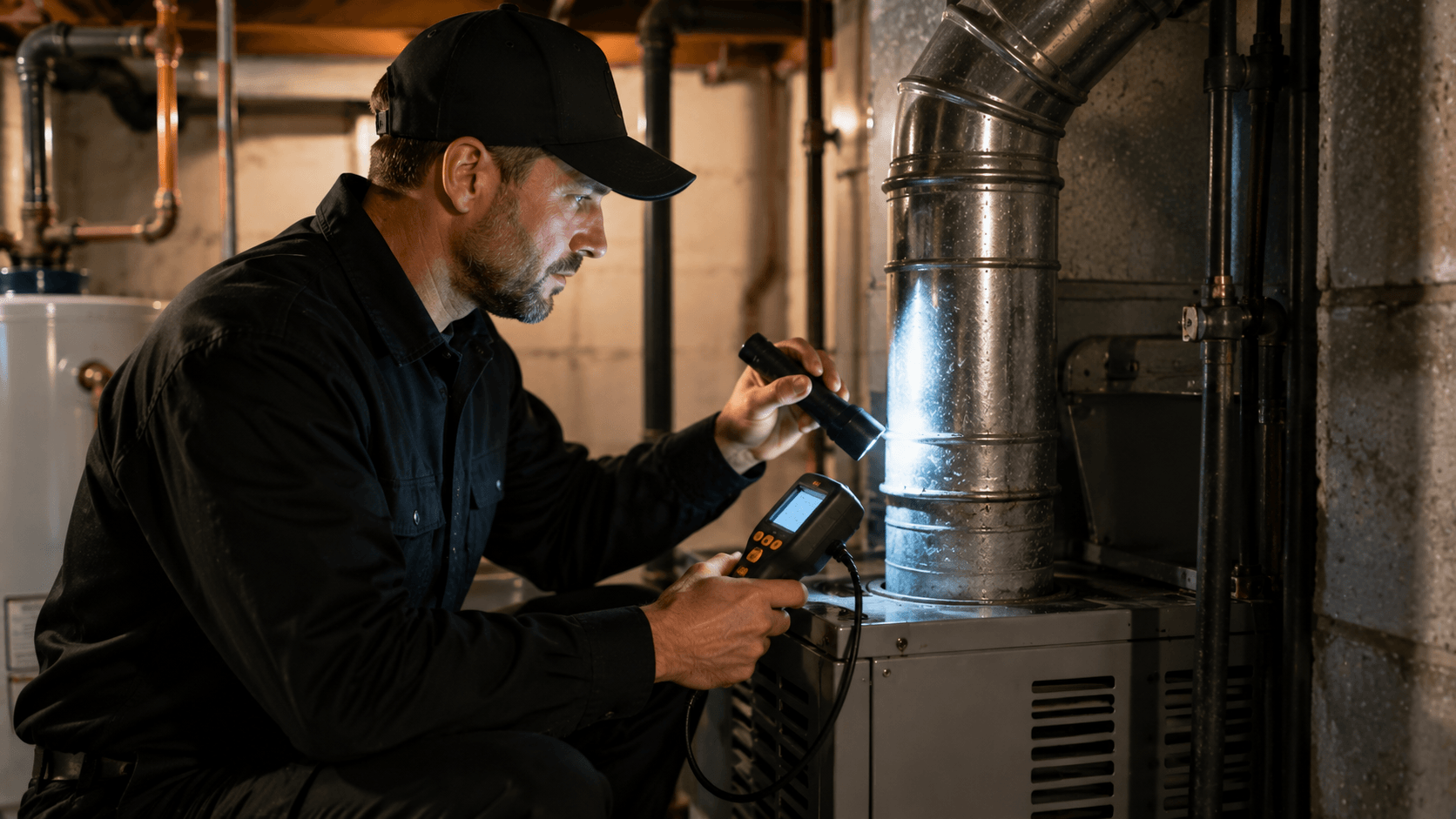
Early inspection may help identify whether the issue is a simple vent connector repair, a chimney liner problem, a draft issue, moisture problem, or a larger venting safety concern.
What Homeowners Should Do Next
My advice to homeowners is simple: if you see rust, white staining, moisture, loose vent pipe, soot marks, or unusual odor near your furnace or water heater, do not ignore it. The appliance may still turn on, but that does not mean the venting system is safe.
- Do not assume rust is only cosmetic
- Take photos of rust, white residue, soot, or moisture
- Check whether the vent pipe feels loose or separated
- Make sure carbon monoxide detectors are installed and working
- Do not block or cover the vent pipe
- Avoid temporary patching without finding the cause
- Schedule a professional chimney and venting inspection
- Repair the source before corrosion spreads or draft problems worsen