
Repairs & protection — Connecticut
The crown does the quiet work.
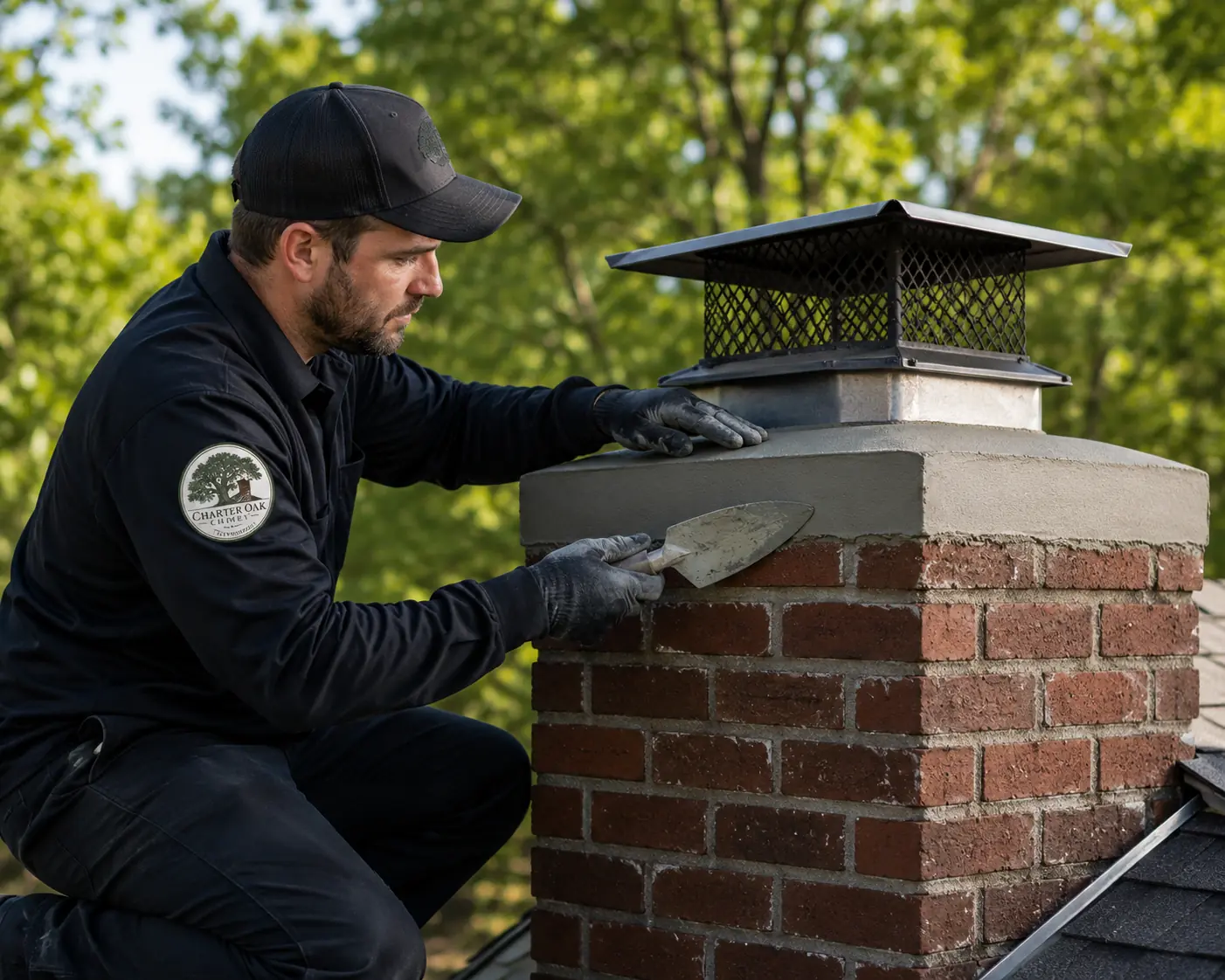
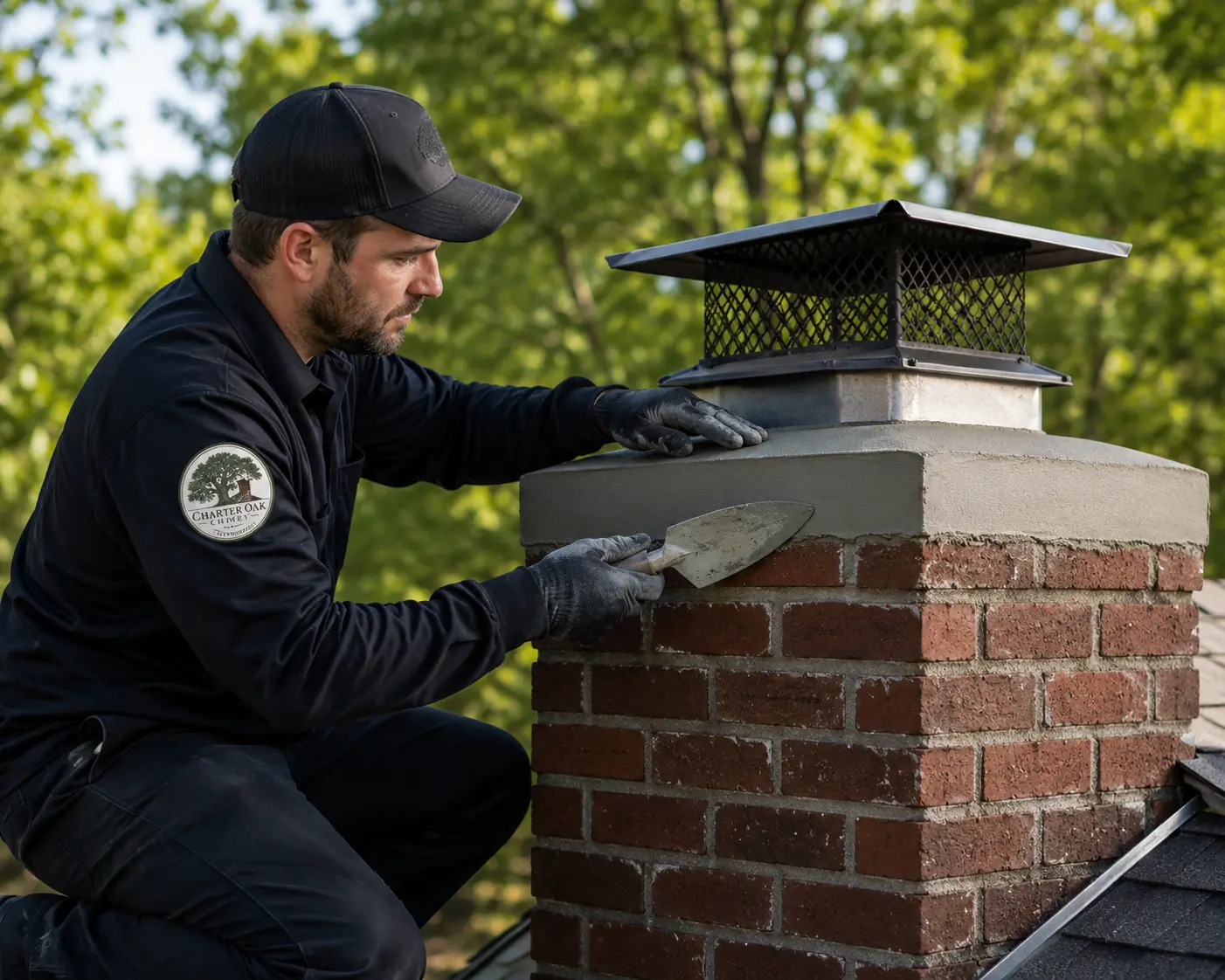
The crown is the concrete surface at the very top of your chimney — the part that sheds rain and snow away from everything below it. When it cracks, the whole chimney starts taking on water. We photograph it, explain it, and repair it at the right scope.
Photos first, scope in writing. You'll see roofline shots of your actual crown before anyone decides between repairing it and rebuilding it — because that decision belongs to the evidence, not the pitch.
Pick a date and arrival window online — we confirm before we arrive.
The part you never see
What a crown is and why it fails
The crown is your chimney's roof: a sloped concrete top surface that sends water off the edges instead of down into the masonry. It works in silence — until it doesn't.
Concrete at the top of a chimney lives a hard life: full sun, driving rain, and every freeze-thaw cycle Connecticut can offer. Hairline cracks open first, then widen a little more each winter as water gets in and freezes. Once the crown stops shedding water, the trouble travels downward — showing up as stains inside the house and damaged masonry in the courses below the top.
The honest ladder
Repair or replace — the photos make the call
Crown work has two honest outcomes, and one common mix-up worth naming. Here's the ladder we actually use.
What to look for
Signs the crown is failing
Crown condition can't be judged from the yard — it's assessed via a $149 inspection, credited toward the repair if you proceed, with roofline photos you look at yourself.
Related services
Neighbors at the chimney top
FAQ
Crown repair questions
The crown is the masonry top surface of the chimney — usually concrete — that sheds water away from the brick below. The cap is the metal cover that sits over the flue opening itself, keeping rain, animals, and debris out of the flue. They fail differently and are repaired differently, which is why we photograph both. If your cap is the problem, see our cap replacement page.
Both are real outcomes, and the photos make the call. Minor surface cracking can usually be sealed or repaired in place. When the deterioration is structural — large cracks, missing sections, crumbling edges — patching over it doesn't hold, and rebuilding the crown is the honest answer.
Usually from the roofline, which is why crowns fail quietly: cracks, pooling water, or deteriorated edges that you can't see from the yard. From inside the house, crown trouble tends to show up as water stains near the chimney or damaged masonry below the top. Roofline photos confirm it either way.
Hairline cracks tend to widen with each freeze-thaw season, and water that gets past the crown works on the masonry below it. Left alone, the repair scope usually grows — which is why the ladder starts with the smallest fix, while the smallest fix is still enough.
Book online: choose your service, pick a preferred date and arrival window, and submit. Crown work is assessed via a $149 inspection, credited toward the repair if you proceed — so the repair-or-rebuild call is based on roofline photos of your actual crown.
Next step
Find out what's happening at the top.
Roofline photos of your crown, a plain-English explanation, and an honest call between repair and rebuild — in writing before anything starts.