
Repairs & protection — Connecticut
A small part with a big job.
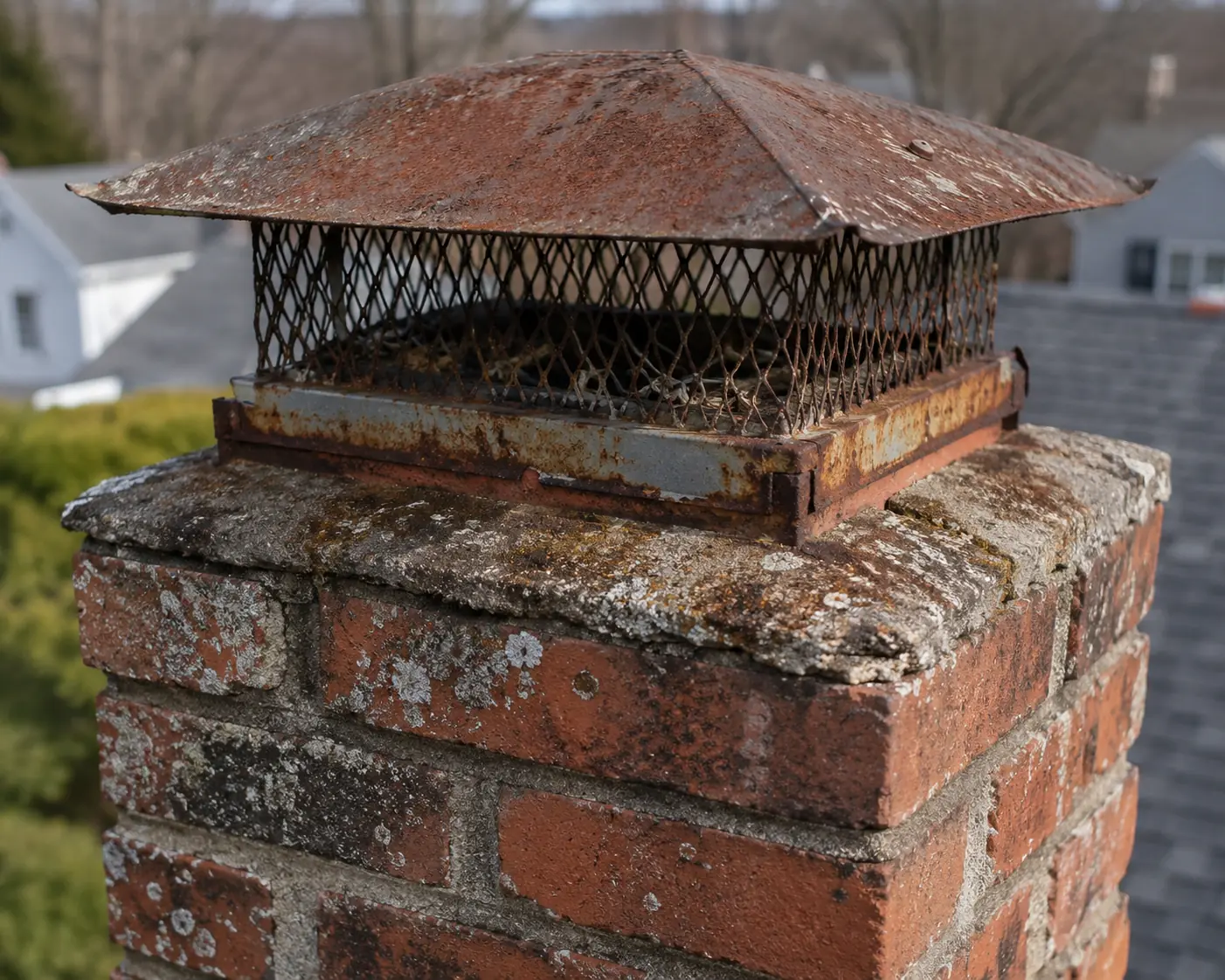
The chimney cap is the metal cover over your flue — the only thing standing between an open pipe to the sky and everything that wants to come down it. When it rusts out, blows off, or was never there, replacing it is a small job that prevents expensive ones.
Cap replacement is one of the smaller chimney jobs, and we treat it that way. You get photos of what's on your chimney now, and if a properly fitted cap is all you need, that's exactly what we'll say.
Pick a date and arrival window online — we confirm before we arrive.
The job description
What the cap protects against
Four things want into an open flue, and a fitted cap turns all of them away — without restricting the draft your fireplace needs.
| Rain & snow | Keeps water from falling straight down the open flue and into the firebox and smoke chamber |
|---|---|
| Animals & nests | Screening keeps out birds, squirrels, and raccoons looking for a warm, sheltered shaft |
| Debris | Leaves and branches that would otherwise collect where smoke needs to exit |
| Sparks | Spark arrestor screening reduces embers escaping onto the roof |
What to look for
When replacement makes sense
Fit, not guesswork
Single-flue vs. multi-flue
Caps aren't one-size-fits-all — the right one depends on how many flues your chimney has and what the top looks like.
Related services
Neighbors at the chimney top
FAQ
Cap replacement questions
An uncapped flue is an open pipe to the sky: rain and snow fall straight in, animals move in, and debris collects where smoke needs to go. A cap is the simple guard against all of it — and if yours is missing or rusted through, replacing it is one of the smallest, most useful chimney repairs there is.
The cap is the metal cover that sits over the flue opening. The crown is the masonry top surface of the chimney itself — the sloped concrete the cap sits above. Water trouble at the chimney top can come from either one, which is why we photograph both before scoping anything. If your crown is the problem, see our crown repair page.
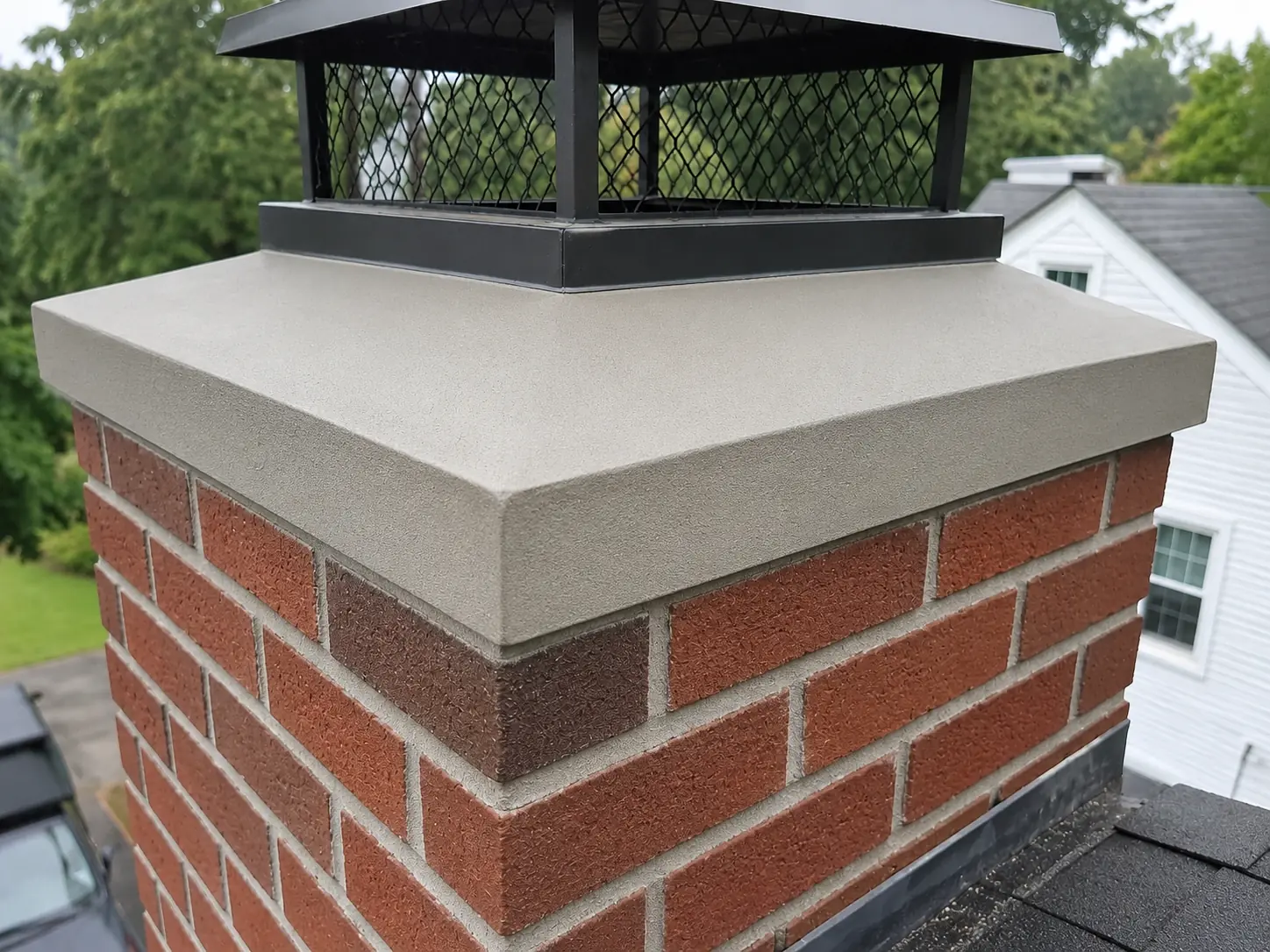
Stainless steel is the common durable choice, and it's what we typically recommend. The right size and style depend on your flue and chimney top, which is why the cap is chosen after measuring on site rather than guessed from the ground.
By measuring at the top. Single-flue caps clamp to the flue tile itself; multi-flue caps mount over the whole crown and need its dimensions. We measure your flue and chimney top during the visit, so the replacement fits the chimney you actually have.
Book online: choose your service, pick a preferred date and arrival window, and submit. Cap replacement is assessed via a $149 inspection, credited toward the work if you proceed — you see photos of your chimney top and a written scope before anything is installed.
Next step
Find out what's on top of your chimney.
Photos of the cap and flue you have now, a plain-English explanation, and a replacement measured to fit — scoped in writing first.