
Repairs & protection — Connecticut
Where the roof meets the chimney.
Flashing is the metal system that seals the joint between your roof and your chimney. When it fails, water gets in — and the stain on your ceiling doesn't say which side of that joint failed. We find out before anyone proposes a repair.
Chimney leaks get blamed on the roof — and roof leaks get blamed on the chimney. We photograph the actual entry point before proposing anything.
Pick a date and arrival window online — we confirm before we arrive.
Symptoms
How flashing leaks show up
"Usually" is the honest word for all of these — the same symptoms can also point to the crown, the cap, or the masonry, which is why the assessment looks at the whole top of the system.
Why flashing is confusing
Two layers of metal, one job
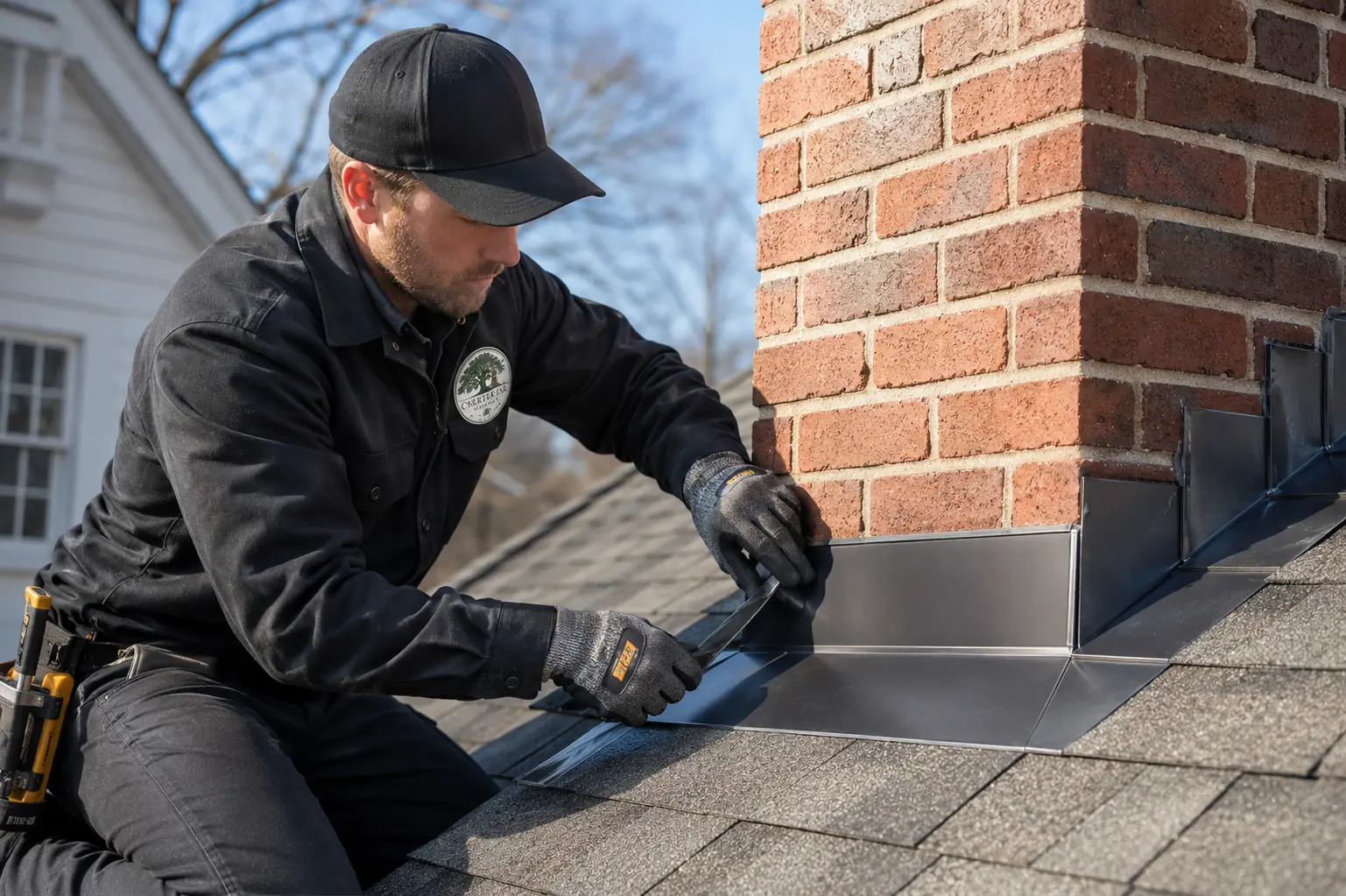
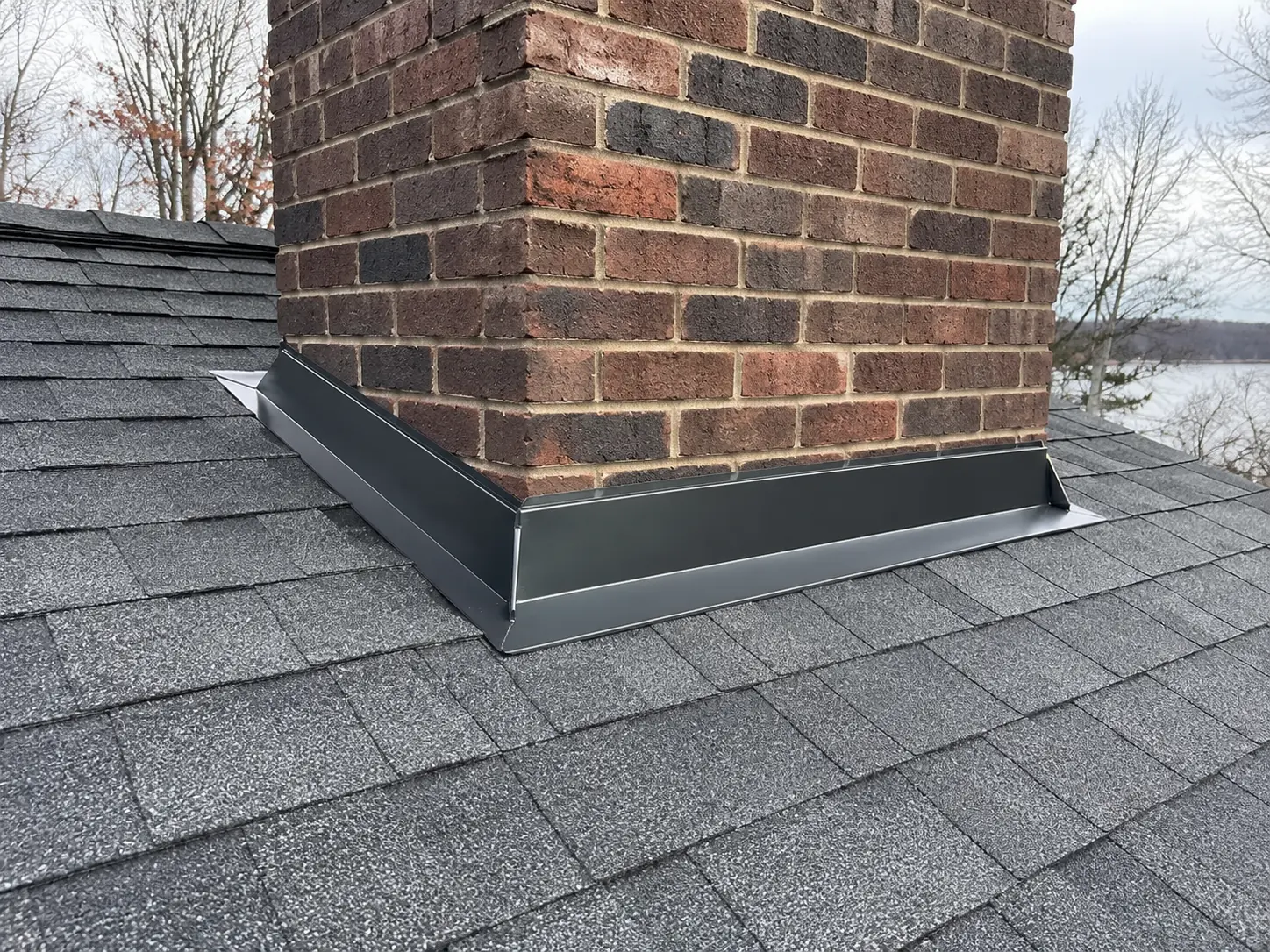
Chimney flashing isn't a single piece — it's a system. Step flashing weaves into the shingles along the sides of the chimney, and counter flashing is set into the masonry above it, lapping over the top. Water that gets past one layer is supposed to be shed by the other.
When any part of that system fails, the result inside the house looks exactly like a cracked crown, a cap problem, or masonry soaking up water: a stain near the chimney. From the living room, they're indistinguishable.
That's why diagnosis starts with photos of the whole top-of-chimney system — flashing, crown, cap, and masonry — not with an assumption about which one failed.
Repair boundaries — honest
What we'll propose, and what we won't
The repair should match what the photos show — no more, no less. These are the boundaries we work inside.
Related services
Often booked alongside
FAQ
Flashing questions
Wind-driven rain reaches places an ordinary shower never touches. A small gap at the flashing can shrug off light rain for years and then let water in when a storm pushes rain sideways against the roofline. That pattern — dry most of the time, wet after big storms — is one of the classic signatures of a flashing problem, and it's exactly what the photo assessment is designed to confirm or rule out.
From inside the house, the two look identical — a stain near the chimney could come from the flashing, the crown, the cap, the masonry, or the roof plane itself. That's why we photograph the whole top-of-chimney system before proposing anything. If the photos show the problem is on the roof plane rather than the chimney, we tell you that plainly — that repair belongs to a roofer, not to us.
Honestly: sealant is a stopgap, not a fix, when the metal itself has failed. Where the flashing is sound and a joint has simply opened up, re-sealing can be a legitimate repair — and where the metal is rusted through or pulled away, caulk only hides the problem for a season. The photos show which situation you have, and the written scope says which repair we're proposing and why.
It's done as a $149 inspection, credited toward the repair if you proceed. We look at the flashing line where the chimney meets the roof, plus the crown, cap, and masonry above it — because from inside, failures in any of them look the same. You get photos of what we find, a plain-English explanation, and a written scope if repair is recommended.
Book online: choose the service that fits, pick a preferred date and arrival window, and send the request. We review every request and confirm the window with you before the visit.
Next step
Stop guessing which side of the joint failed.
A photo-documented assessment of the flashing, crown, cap, and masonry — and a written scope before anything gets repaired.