
Repairs & protection — Connecticut
Masonry repair, joint by joint.
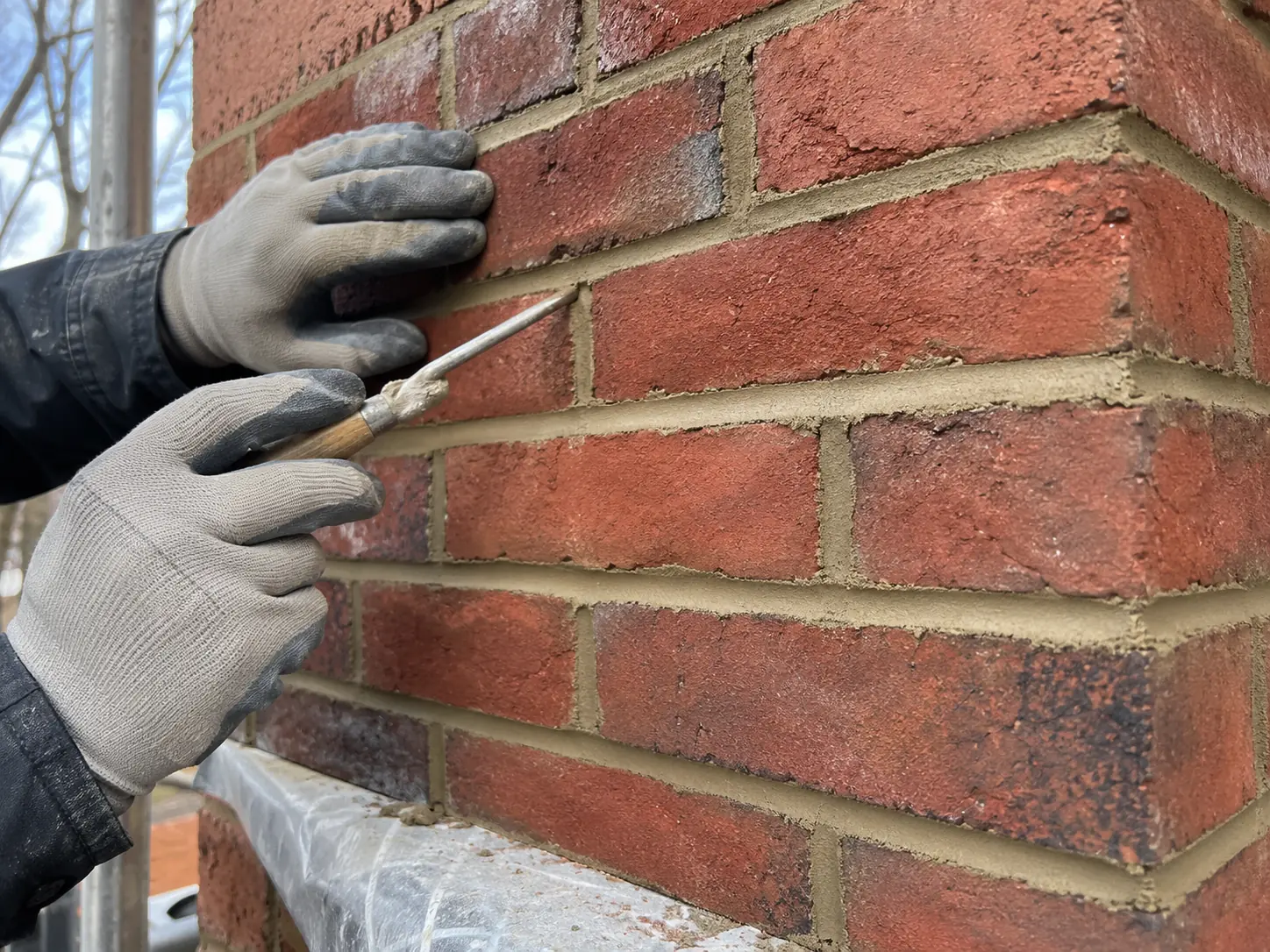
Brick and mortar take the full force of Connecticut weather. When joints fail or brick faces flake, we photograph exactly what's failing — and repair it at the smallest scope that actually solves it.
You'll see photos of the actual joints and brick faces — and whether repointing is enough, before anyone talks about rebuilding.
Pick a date and arrival window online — we confirm before we arrive.
The pattern
What Connecticut weather does to brick
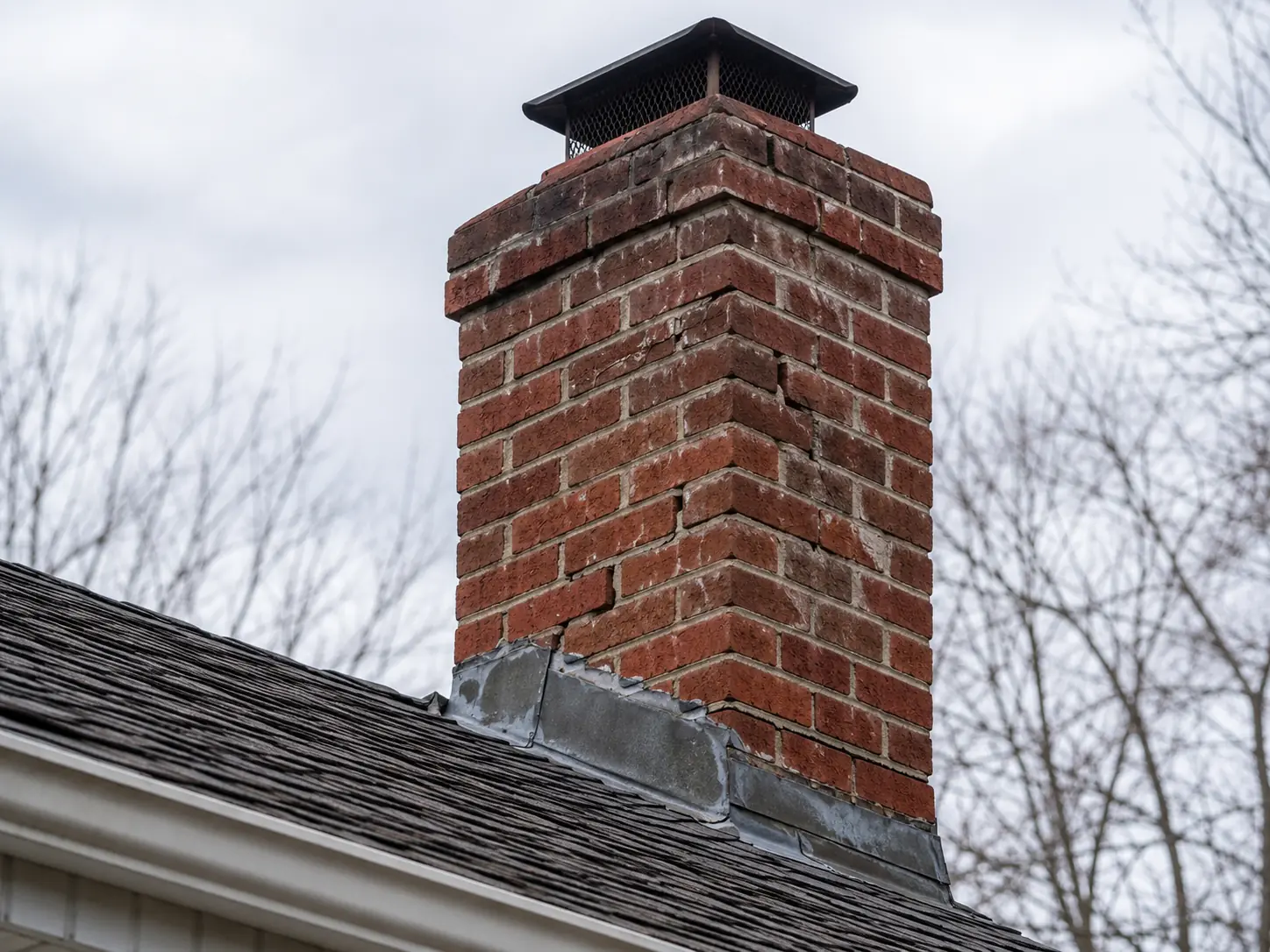
Every winter runs the same experiment on your chimney: water finds an opening, freezes, expands, and pries. Mortar joints fail first because they're the softest part of the wall — which is by design. Joints are meant to be renewable; brick isn't.
| Symptom | What's happening |
|---|---|
| Crumbling or receding mortar joints | The mortar has weathered past its service life — open joints no longer shed water away from the wall |
| Flaking or "popped" brick faces (spalling) | Water soaked into the brick and froze, forcing the face off from within |
| Cracks that widen each spring | Freeze-thaw cycles at work — water enters, freezes, expands, and repeats all winter |
| Damp patches or staining near the chimney | Water penetrating through open joints and into the structure behind them |
The honest ladder
Repointing vs. partial rebuild vs. rebuild
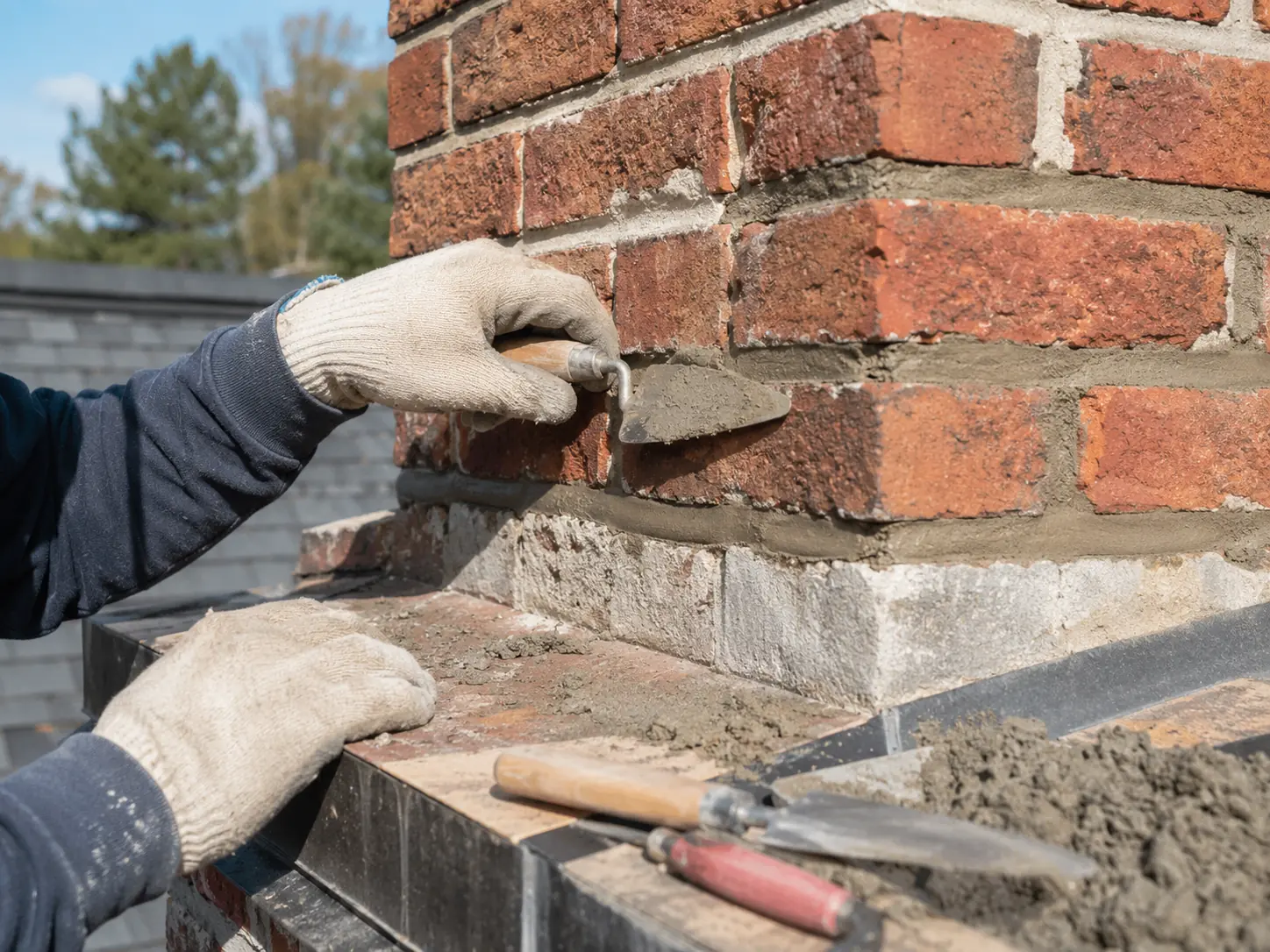
Masonry repair is a ladder, and honest work starts on the lowest rung that solves the problem. Most chimneys never need the top of it.
First step
Why a site assessment matters
Nobody can honestly scope masonry work from the street or from a phone photo — the difference between repointing and rebuilding lives in the condition of individual joints and brick faces. That's why masonry repair here starts with a $149 inspection, credited toward the repair if you proceed. You get photos of the actual condition, a plain-English explanation, and a written scope that matches what the photos show.
Related services
Often part of the same fix
FAQ
Masonry repair questions
Mortar joints are the chimney's weather seal. When they crumble or recede, water gets into the masonry, and each Connecticut winter's freeze-thaw cycles push the damage a little further. It doesn't usually mean the chimney is failing — but it does mean this is the right time to have the joints looked at and photographed, while repointing is still the likely fix.
Repointing means grinding out the failed mortar to a sound depth and repacking the joints with fresh mortar. The brick stays; only the mortar is renewed. Done properly, it restores the chimney's weather seal without the cost of replacing masonry.
We match as closely as available materials allow, and we show you the closest match before work begins. An honest note: fresh mortar and new brick start out looking newer than what's around them, then weather and blend over time. We won't promise an invisible repair — no one honestly can.
Warm, dry weather is best — mortar needs moderate temperatures to cure properly. In Connecticut that generally means the warmer months. If your joints are failing heading into winter, an assessment now lets you see the condition and plan the work for the right window.
Book online: choose your service, pick a preferred date and arrival window, and submit. Masonry work starts with a $149 inspection — credited toward the repair if you proceed — so the scope is based on photos of your actual joints and brick, not a guess from the street.
Next step
See what your joints look like up close.
Photos of the actual masonry, a plain-English explanation, and a written scope — starting at the smallest fix that solves it.