
Repairs & protection — Connecticut
Chimney liner service in Connecticut
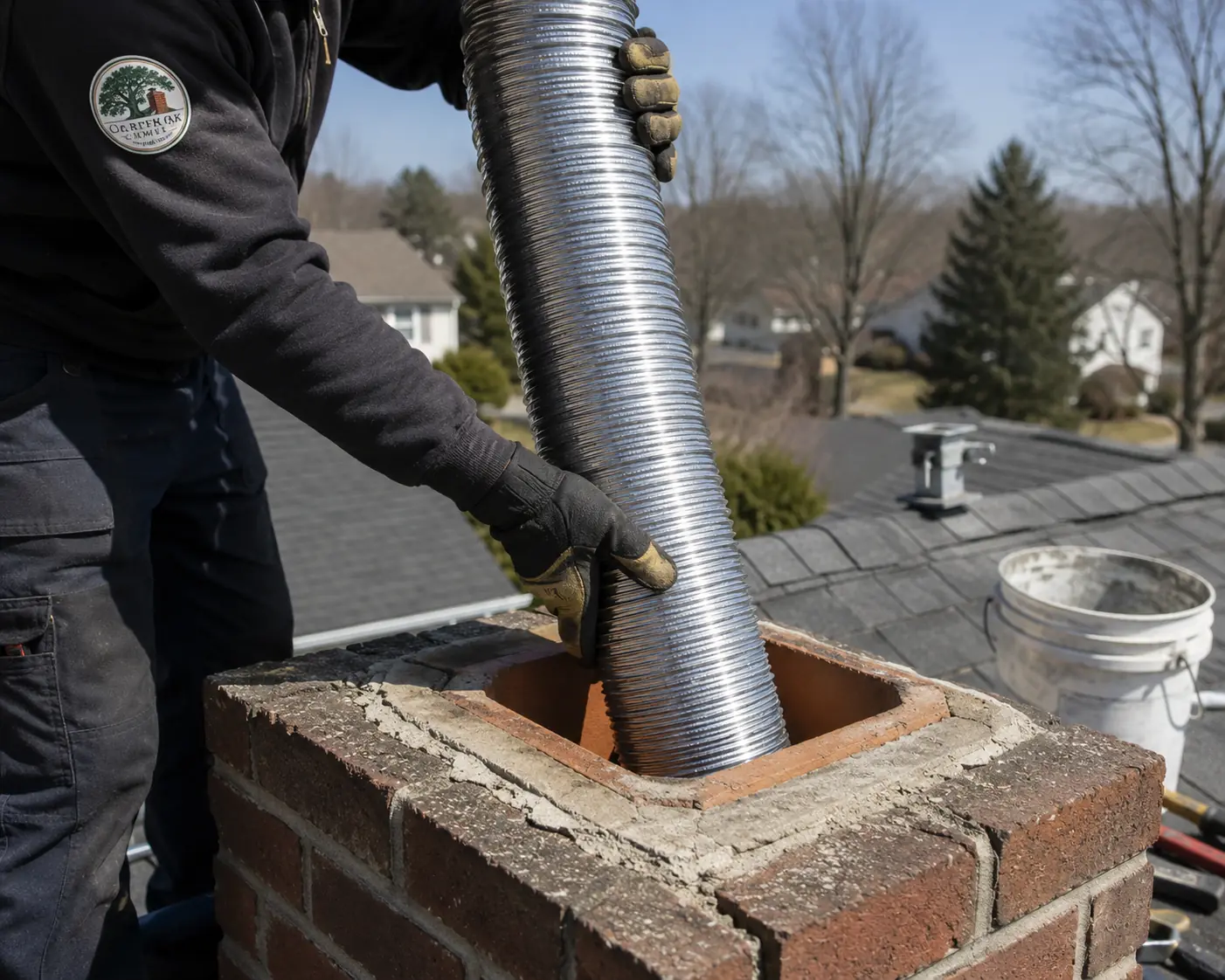
The liner is the chimney inside your chimney. Every flue has a job: carry smoke, gases, and heat out of the house without letting them touch anything else on the way — whether it serves a fireplace, an oil furnace, a boiler, or a water heater. Its condition is something you establish by looking, not guessing.
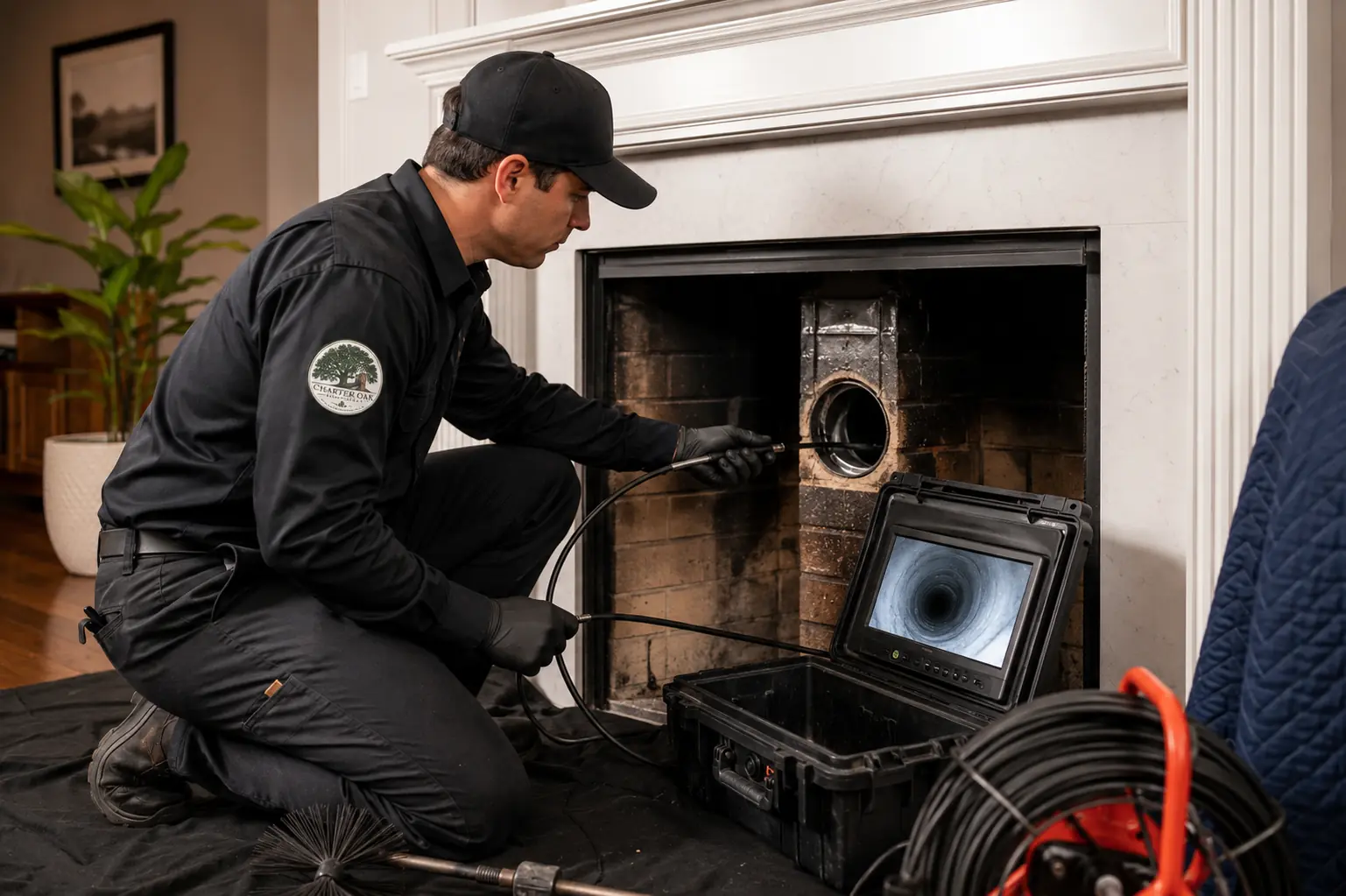
Liner condition is invisible from the living room. We look first, show you what we see, and only then talk about relining.
Pick a date and arrival window online — we confirm before we arrive.
Which flue is yours?
Fireplace, furnace, boiler, or water heater
A liner is sized and specified for what it vents. A fireplace flue and an oil-furnace flue are different jobs — pick the path that matches your chimney.
Wood or gas fireplace flue
Clay-tile or unlined fireplace flues: cracked tiles, open joints, damage after a chimney fire, stainless-steel relining.
Continue on this page ↓ Oil furnace & boiler fluesHeating-appliance flue
Oil-furnace flue cleaning, boiler flue inspection, clay liner deterioration from acidic exhaust, stainless relining sized to the appliance.
Oil & gas furnace flue & liner page → Gas conversionsOil-to-gas conversion liner
A new gas furnace or boiler venting into a flue built for oil usually needs a correctly sized liner — we inspect, then specify.
Conversion liners → Water heatersWater heater venting through masonry
A water heater left alone in a big flue after a furnace replacement condenses and struggles to draft. Worth a look.
Water-heater venting →What the liner does
Three jobs, all of them invisible
When the liner is doing its work, you never think about it. It contains combustion byproducts — smoke, gases, and the residue they leave — and gives them a clean path out of the house.
It protects the masonry around it. Byproducts moving through a flue are corrosive over time, and the liner is what keeps them off the brick and mortar that hold the chimney up.
And it keeps heat where it belongs — inside the flue, moving upward, away from the structure of the house. Those three jobs are why liner condition matters more than its visibility suggests.
Common liner problems
What the camera tends to find
Four problems account for most of what we see inside Connecticut flues. Which one you have — if any — is exactly what the assessment establishes.
| Cracked or spalled clay tiles | Age and thermal stress — clay tiles expand and contract with every fire, and eventually some crack or shed their faces |
|---|---|
| Gaps at the joints | Settling and mortar loss — the mortar between tile sections erodes over time, opening seams in the flue |
| Blockages | Nests and debris — animals and weather put things in flues that don't belong there |
| Damage after a chimney fire | Requires evaluation before further use — a chimney fire can damage the liner in ways that only an internal look can establish |
Inspection first, always
Nobody should quote a liner they haven't seen
Relining is a significant job. The only honest way to recommend one — or to tell you that you don't need one — is to look inside the flue first.
Related services
Often booked alongside
FAQ
Liner questions
Usually, you can't — not from the living room. The liner lives inside the chimney, and most of it is invisible without getting a light or a camera into the flue. Occasionally there are clues, like fragments of clay tile in the firebox, but the honest answer is that liner condition is established by looking, not guessing. That's what the assessment is for.
No. Many older Connecticut homes have unlined flues or original clay-tile liners, depending on when the chimney was built and what's been done to it since. An inspection tells you what you actually have — which is the starting point for any honest conversation about whether it needs anything.
Relining means installing a new liner inside the existing chimney, so the flue has a sound, continuous path again. Whether your chimney needs a repair, a reline, or nothing at all depends on what the camera shows — and whatever we recommend comes with the footage-backed findings and a written scope before anything happens.
If you suspect liner damage, or there's been a chimney fire, don't use it until it's been looked at. The liner is what stands between combustion byproducts and the rest of the chimney, and using a system with a compromised liner is the one gamble we'll always tell you not to take. If the flue checks out, you'll know that too — with the pictures to prove it.
Book online: choose the service that fits, pick a preferred date and arrival window, and send the request. We review every request and confirm the window with you before the visit.
Next step
Find out what's actually inside your flue.
A look inside the liner, photo-documented findings, and a written scope only if the flue needs one.