
Heating-appliance flues — Connecticut
Oil & gas furnace chimney liner & flue service in Connecticut
Soot piling up at the base of the chimney. Rust around the furnace vent pipe. A new gas boiler venting into a flue built for oil. A damp, stained chimney wall in the basement. These are heating-flue problems — and in a state that still runs on a lot of oil heat, they're common.
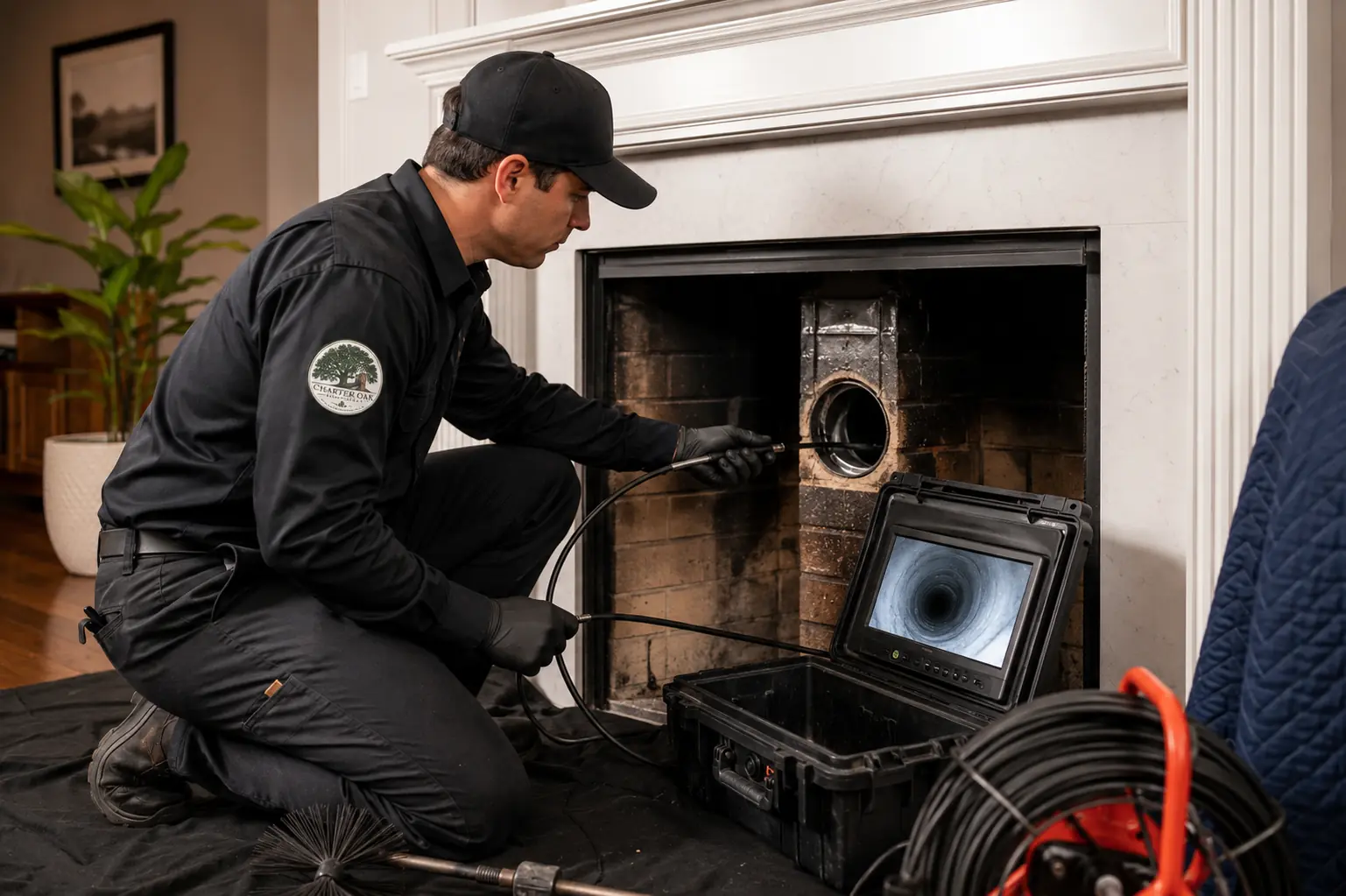
We look inside the flue with a camera before anyone says the word "reline." Then you get photos, a plain-English explanation, and a written scope — cleaning, repair, or a properly sized stainless liner, whichever the flue actually needs.
$149 assessment, credited toward the work if you proceed · We confirm before we arrive
Start with your problem
What homeowners actually notice
Nobody searches for "flue sizing." They notice one of these. Here's what each usually means — and the assessment confirms which one it is.
Rust around a vent pipe is worth reading about before the visit: what a small venting warning sign usually means.
Oil furnace & boiler flues
Oil flue cleaning and inspection
Oil heat leaves soot. Soot narrows the flue, and a narrowed flue drafts badly — which puts more soot into the house side of the system. Annual tune-ups handle the burner; the flue above it is a separate job.
We inspect the flue from the inside, clean it when it needs cleaning, and photograph the condition of the liner while we're in there. If the liner is sound, that's the report. If it isn't, you'll see why.
Clay liners & unlined flues
When the original liner gives up
Most older Connecticut chimneys have clay-tile liners; some have none. Decades of acidic oil exhaust and freeze-thaw winters crack the tiles, open the joints, and eventually let flue gases and moisture reach the brick and mortar that hold the chimney up.
The signs are quiet — tile fragments in the cleanout, staining on the chimney inside the house, mortar loss at the top — and the diagnosis is only honest when the camera has been down the flue.
| Cracked or spalled tiles | Thermal stress and acidic exhaust — the tile faces shed and the flue loses its seal |
|---|---|
| Open joints between tiles | Mortar between tile sections erodes; exhaust and condensate reach the masonry |
| No liner at all | Common in pre-war chimneys — exhaust runs directly against the brick |
Stainless-steel relining
A new flue inside the old chimney
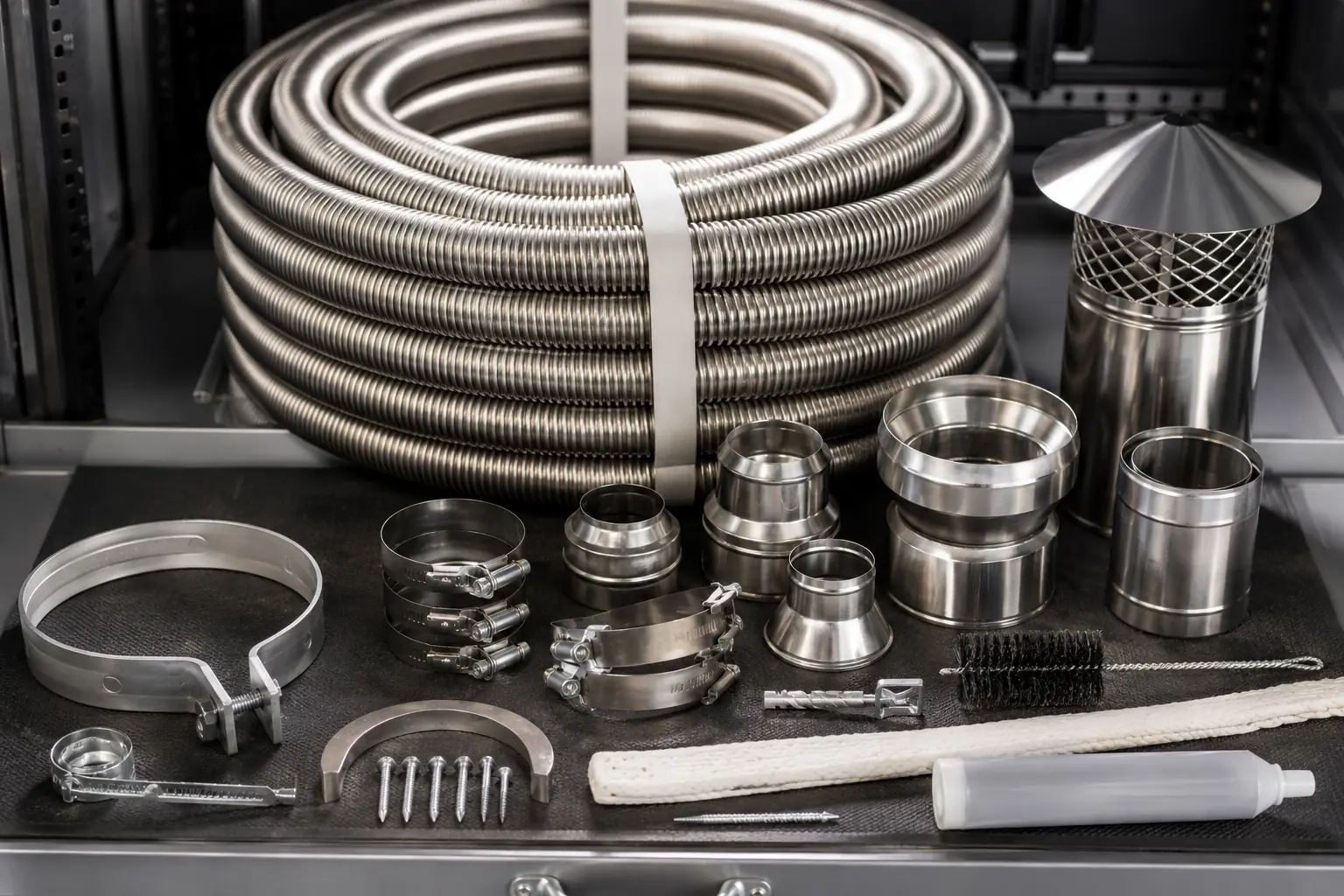
Relining installs a continuous stainless-steel liner inside the masonry, sized to the appliance it vents. It's the standard fix when the original flue is failing or is the wrong size for what's connected to it now — and it's a significant job, which is why we never quote one we haven't seen.
Sized for oil exhaust
A liner matched to the furnace or boiler restores draft and keeps acidic soot and condensate off the masonry.
Hot-water and steam boilers
Same idea, sized to the boiler's venting requirements rather than a fireplace's — the two are not interchangeable.
When the fuel changes, the flue usually has to
Gas exhaust is cooler and wetter. An oversized oil flue condenses it; a correctly sized liner is often part of the conversion.
Right size, right material
Venting is sized from the appliance's requirements and the chimney's height and run. We inspect, then match — not the other way around.
Venting requirements come from the appliance manufacturer and the codes your town enforces. We size and install to those requirements and put the specification in the written scope — we don't quote code language on a web page.
Water heaters on masonry chimneys
The appliance everyone forgets
A gas or oil water heater venting into the chimney worked fine when a furnace shared the flue and kept it warm. Replace the furnace with a high-efficiency unit that vents out the wall, and the water heater is alone in a flue built for two — cold, oversized, and prone to condensation, backdrafting, and liner damage.
If your furnace was replaced in the last several years and the water heater still vents into the chimney, that arrangement deserves a look.
Related
Often booked alongside
FAQ
Heating-flue questions
Oil-fired appliances leave soot in the flue, and soot builds up until it restricts draft or falls to the base of the chimney. How often a flue needs cleaning depends on the appliance, its tune-up history, and the chimney itself — which is why we look inside first and clean when the flue actually needs it.
Often the flue that served an oil furnace is the wrong size and material for a gas appliance, whose cooler, wetter exhaust can condense inside an oversized masonry flue and attack the liner and mortar. Whether yours needs a new liner depends on the appliance, the existing flue, and the manufacturer's venting requirements — we inspect first and give you a written answer, not a rule of thumb.
A stainless-steel liner is a continuous metal flue installed inside the existing masonry chimney, sized to the appliance it vents. It restores a sound, correctly sized path for exhaust when clay tiles have deteriorated, joints have opened, or the original flue is the wrong size for the appliance now connected to it.
Many do, and it works when the flue is sized and lined for it. Problems start when a small, cooler-venting appliance is left alone in a large flue after a furnace is replaced — condensation, staining, and liner deterioration follow. The assessment checks the actual venting arrangement and tells you what, if anything, it needs.
It is done as a $149 inspection, credited toward the work if you proceed. You get photos from inside the flue, a plain-English explanation, and a written scope with pricing for any cleaning, repair, or relining before anything starts.
Next step
Find out what your heating flue actually needs.
A camera look inside the flue, photo-documented findings, and a written scope — cleaning, repair, or a properly sized liner — only if the flue needs it.