
Repairs & protection — Connecticut
Masonry that sheds water, not absorbs it.
Brick and mortar are porous — they drink water, and Connecticut winters freeze what they drink. A breathable water-repellent treatment helps sound masonry stay sound. The key word is sound, and that's where we start.
Waterproofing the damage in doesn't work. If the masonry needs repair first, we'll show you why before treating anything.
Pick a date and arrival window online — we confirm before we arrive.
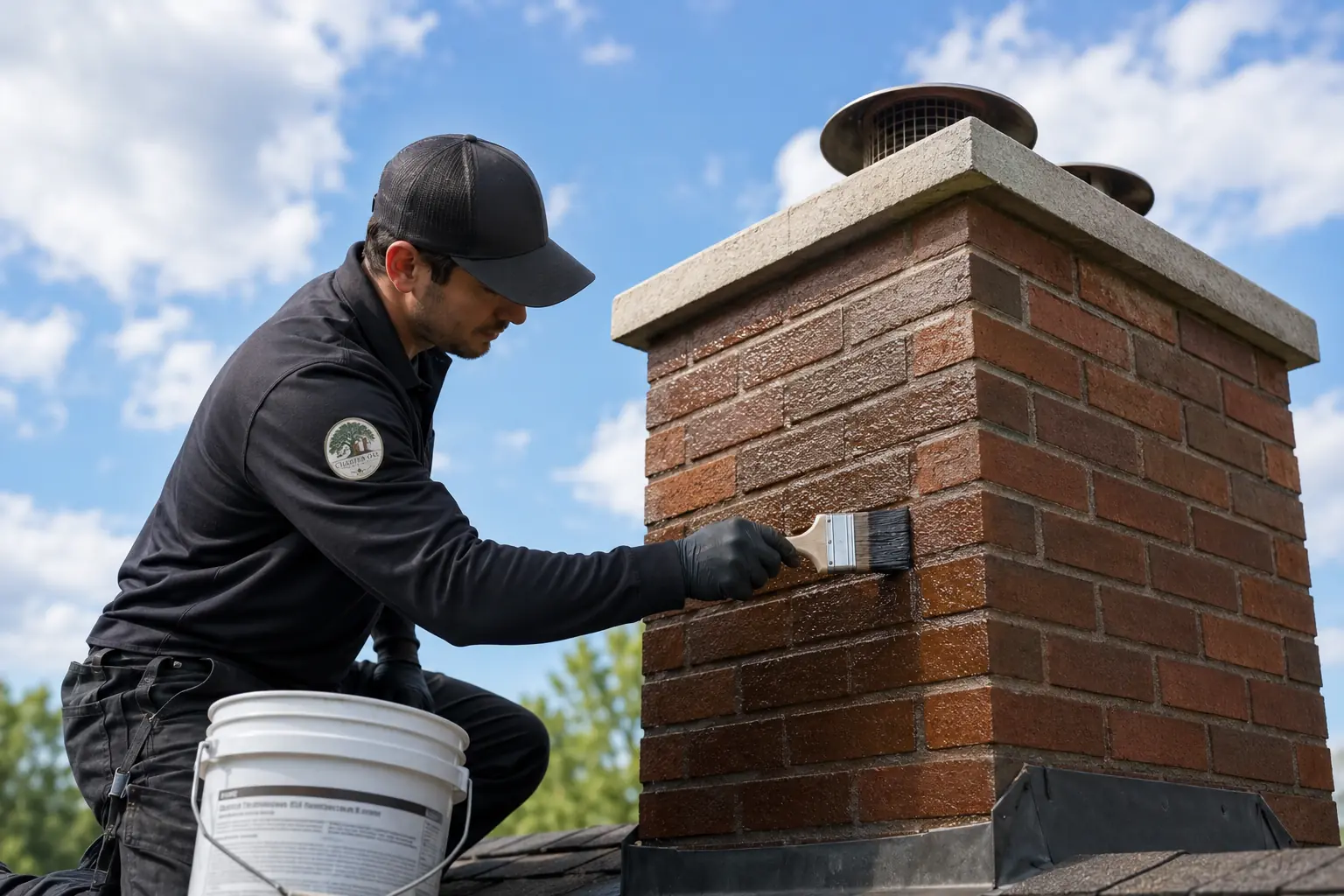
What it is
A repellent that lets the masonry breathe
Chimney waterproofing is a breathable water-repellent treatment applied to the exterior masonry. It changes how the surface handles water: liquid water beads and sheds instead of soaking in.
The breathable part matters as much as the repellent part. Masonry always carries some moisture inside it, and a proper treatment lets that moisture vapor escape while keeping liquid water out.
That's the difference from paint or film-forming sealers, which can trap moisture inside the brick — where freeze-thaw cycles turn it into spalling. A coating that locks water in does the opposite of what you hired it to do.
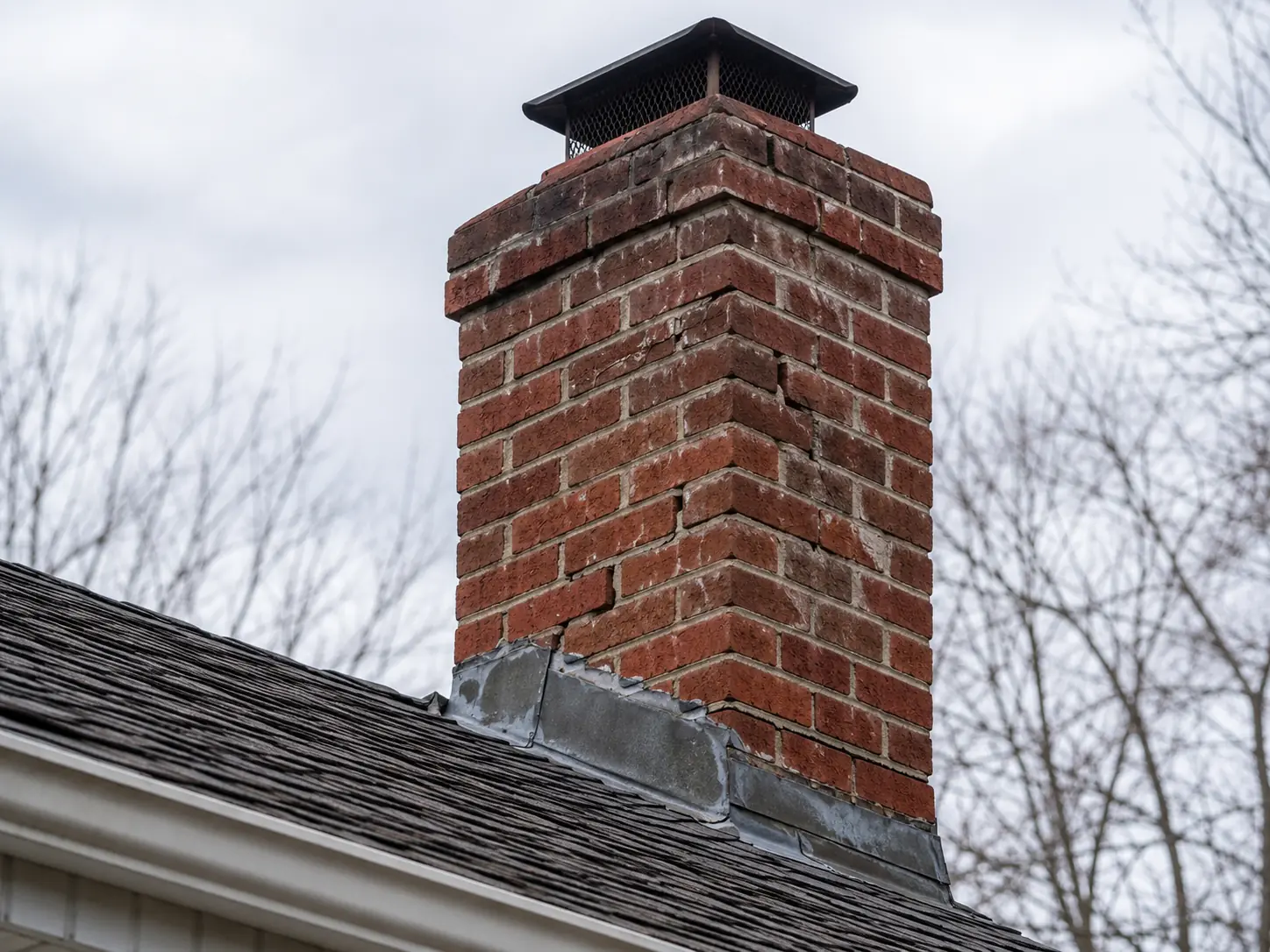
When it helps — and when it can't
The honest limits of a repellent
Waterproofing is a good tool with a specific job. Here's where it earns its keep, and where it doesn't.
Symptoms
Signs water is getting into the masonry
These signs say water is moving through the brick — the assessment establishes where it's coming from and whether repair or treatment is the right response.
Related services
Often booked alongside
FAQ
Waterproofing questions
It depends entirely on where the water is getting in. Waterproofing helps masonry that's absorbing water through its surface. If the water is entering through a cracked crown, failed flashing, or open mortar joints, treatment won't fix that — those need repair first, and we'll show you the photos that say which situation you have before proposing anything.
No, and the difference matters. A breathable water-repellent treatment keeps liquid water out while letting moisture vapor escape from inside the masonry. Paint and film-forming sealers can trap that moisture in the brick — where Connecticut's freeze-thaw cycles go to work on it. Trapping moisture inside masonry is the opposite of protecting it.
Honestly: it's maintenance, not a permanent coating, and reapplication is eventually needed. How soon depends on your chimney's exposure — sun, wind, and weather wear treatments at different rates on different chimneys — so we won't quote you a number of years we can't stand behind. What we can do is tell you what we see when we look at it.
If it's damaged, yes. Treating over failed mortar or cracked brick locks the problem in rather than keeping water out. The right order is repair first — repointing, crown work, whatever the photos show is needed — then treat the sound masonry so it stays that way. If your chimney needs that first step, you'll see why before anything gets applied.
Book online: choose the service that fits, pick a preferred date and arrival window, and send the request. We review every request and confirm the window with you before the visit.
Next step
Protect masonry that's worth protecting.
An honest look at the masonry first — then a treatment that keeps water out, or the repair that has to come before it.