Burn season — Connecticut
Fireplace smoke & draft problems in Connecticut
Smoke rolling into the room. A fire that won't catch a draft. A smoky smell when nothing is burning. A downdraft on windy nights. A damper that sticks. Each one has a specific cause — and the fix depends on which it is.
If smoke is entering the room, stop using the fireplace until it has been evaluated. If there's an active fire you can't control, heavy smoke, or a CO alarm: leave the house and call 911 before you call anyone else, including us.
Scheduled visits, confirmed by a person — not a 24/7 dispatch promise · $149 assessment, credited toward service
Symptoms & likely causes
What you're seeing, and what usually explains it
"Usually" is the honest word. Draft problems often have two causes stacked together, and the assessment sorts out which is doing the damage.
What the assessment covers
Draft is a system, not a part
Smoke goes up when the air pressure at the top of the chimney is lower than at the fireplace. Anything that upsets that — a blockage, a leaky damper, a chimney that's too short, a house that's too tight — sends it into the room. We check the whole path.
After a chimney fire
Don't light it again until someone has looked inside
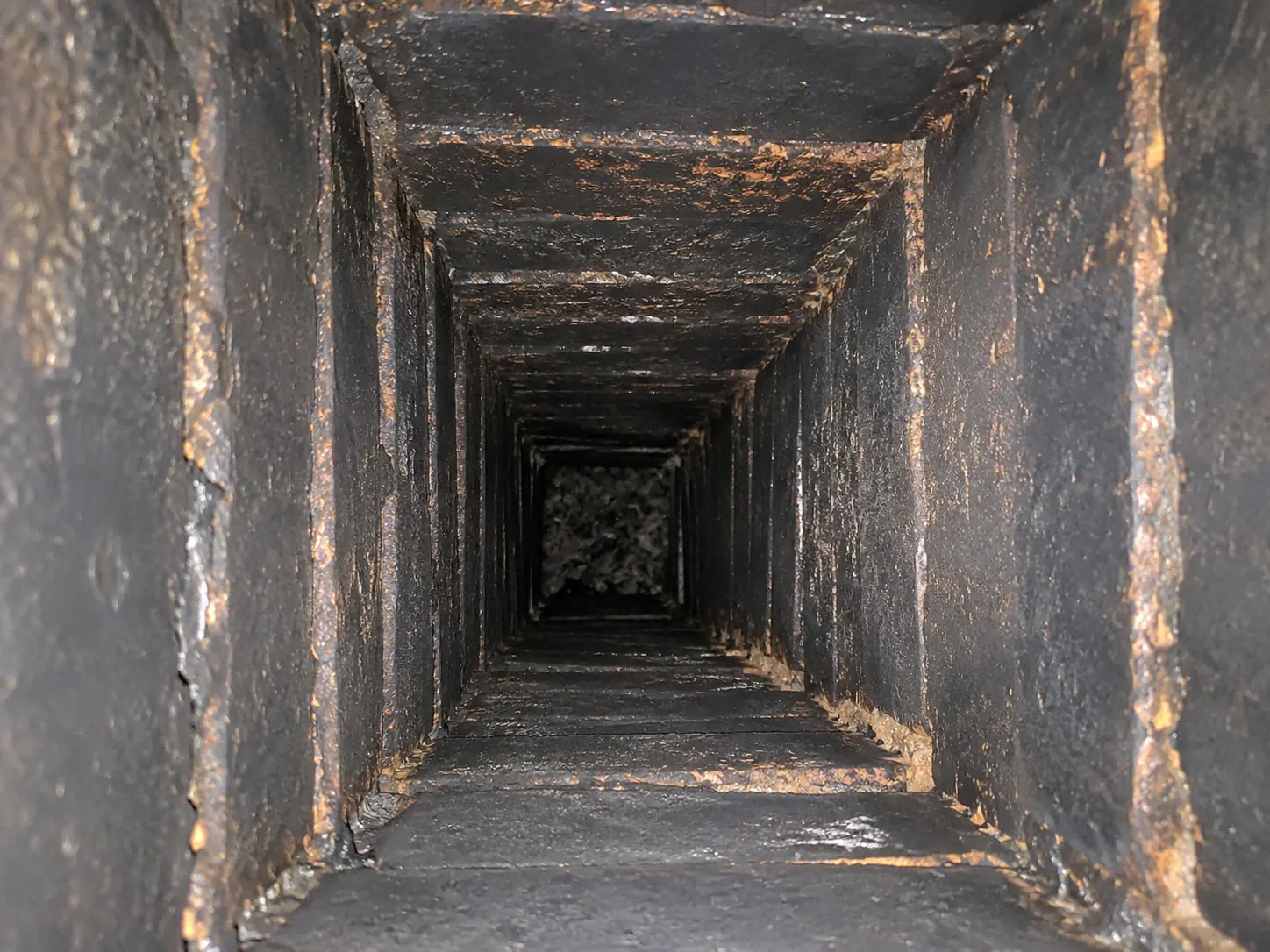
A chimney fire — the roaring, the popping, sometimes flames at the top — burns off creosote at temperatures the flue was never built for. Tiles crack, joints open, and the damage is invisible from the firebox. The next fire can be the one that reaches the framing.
NFPA 211 calls for a Level 2 inspection after a chimney fire: an internal examination of the flue, typically by camera, with a written report of what it found. That's what we do — and if the flue is sound, the report says so with pictures.
Honest scheduling
What we can and can't promise
Related
Often booked alongside
FAQ
Smoke & draft questions
Usually one of five things: a cold flue that hasn't started drawing yet, a damper that isn't fully open, a blockage or heavy creosote narrowing the flue, a chimney that is too short or too small for the fireplace opening, or negative pressure in the house pulling air down the chimney. The assessment works through them in order and shows you which applies.
If smoke is entering the room, you smell smoke when there is no fire, or you have had a chimney fire — no. Stop using the fireplace until it has been looked at. If there is an active fire you can't control, heavy smoke, or a carbon-monoxide alarm, leave the house and call 911 before anything else.
No, and we won't imply it. Technician visits are scheduled — book online for the earliest date shown, or call and we'll tell you honestly what is possible. Anything that is actually an emergency is a 911 call, not a chimney appointment.
Don't use the fireplace again until the flue has been examined from the inside. A chimney fire can crack liner tiles and open joints in ways that aren't visible from the firebox. NFPA 211 calls for a Level 2 inspection after a chimney fire — a camera examination of the flue, photo-documented, with a written report of what it found.
Wind-driven downdraft. Nearby roof lines, trees, or a chimney that terminates too low relative to the roof can push air down the flue in certain winds. The fix depends on the cause — sometimes a different cap design, sometimes chimney height — which is why we look before recommending anything.
Next step
Find out why the smoke is coming in.
A $149 assessment that checks the whole draft path, photographs the cause, and puts the fix in writing — credited toward the work if you proceed.